













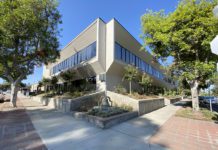



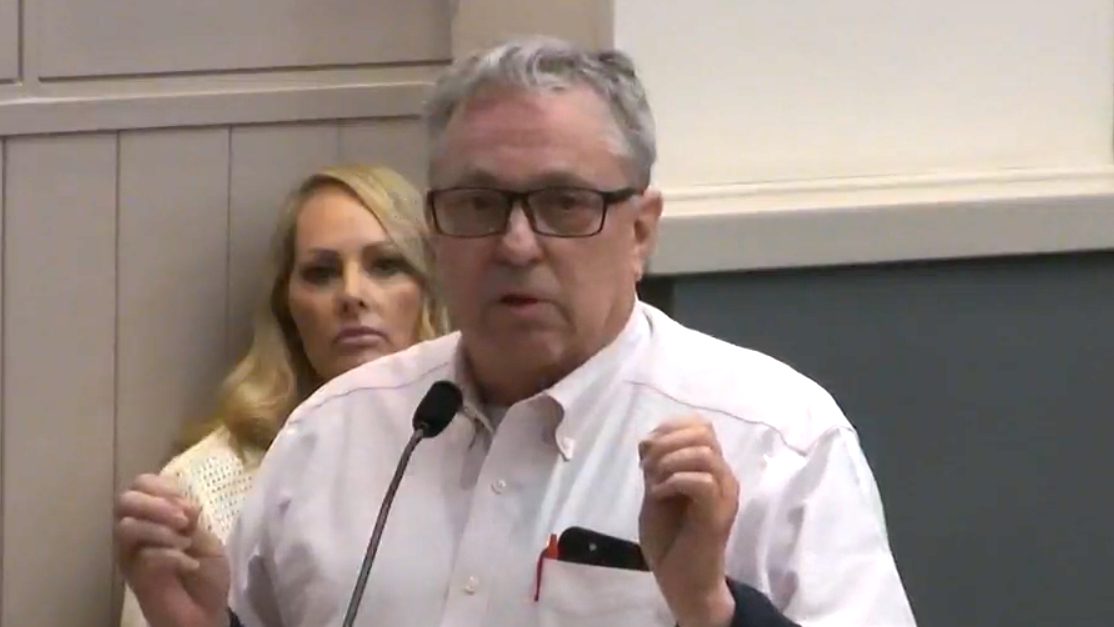

The long-defeated CalTrans 710 Freeway Plans continue to grind-on in South Pasadena — not through pavement or freeway trenching, but through the State’s handling of over 100 South Pasadena homes it took possession of decades ago.
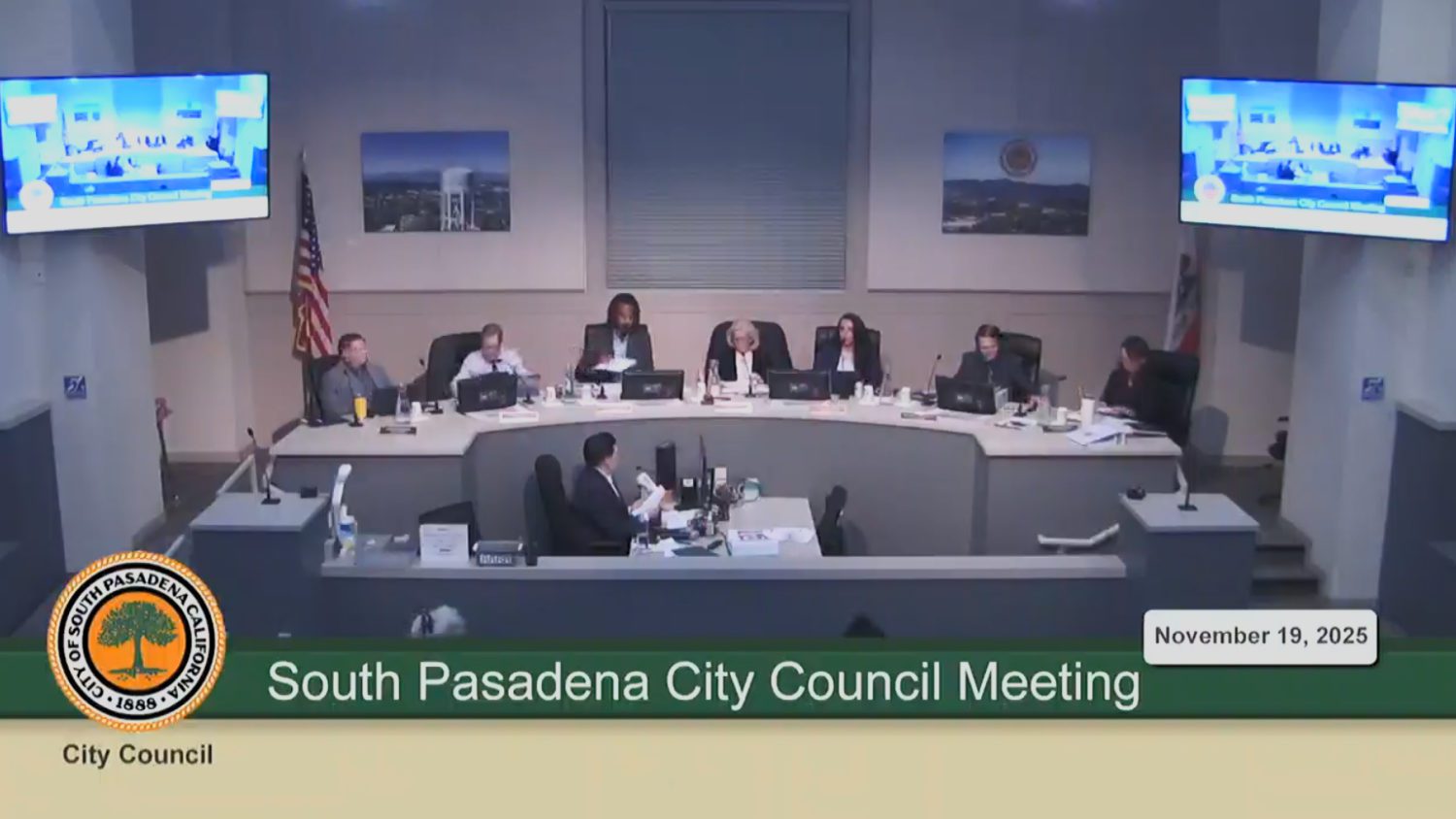
At last week’s South Pasadena City Council meeting, CalTrans property tenants delivered some of the most direct, precise, and sharply-charged testimony heard at a City Council Meeting in years.
They described a “deeply unjust,” “abusive,” and “unlawful” sales process that threatens to displace the very residents who kept these neighborhoods alive while the City fought CalTrans in the courts, at the ballot, and in the public square for more than half a century – and won.

Their stories were consistent, documented, and legally grounded — and they raise a larger, unavoidable question: Has CalTrans has perpetuated bureaucratic misconduct that has left South Pasadena leadership at a loss to protect housed citizens form being unhoused and most likely displaced out of the town they’ve fought for?
“We Are Standing on the Edge of Losing Everything.”
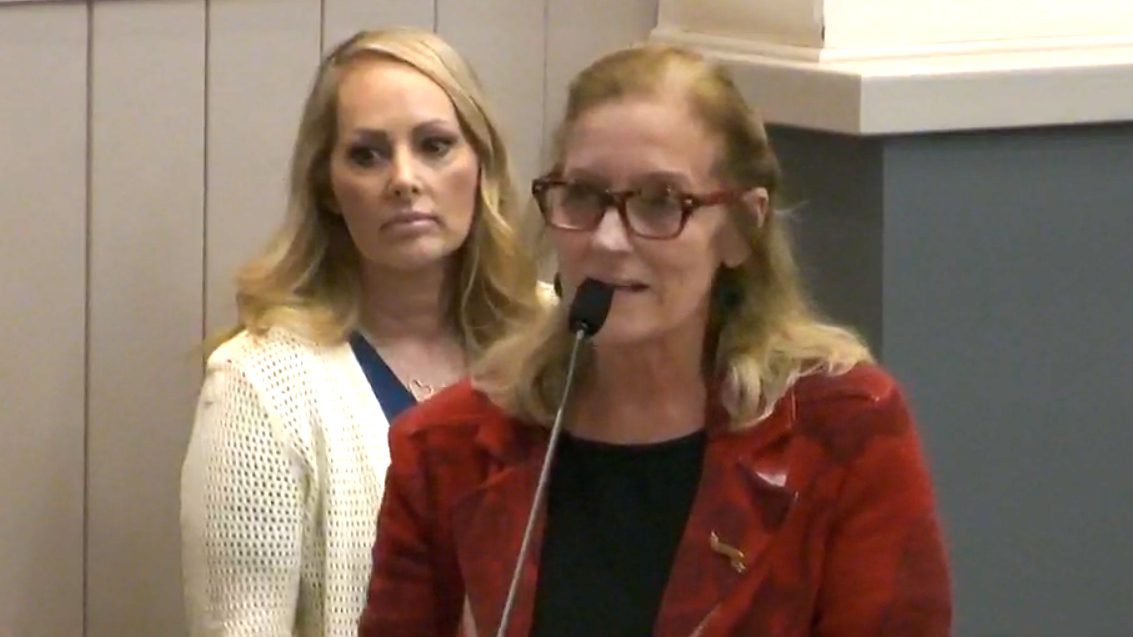
Page Phillips, a 33-year resident, told the Council:
“Many of us are standing on the edge of losing everything because of an unfair, unlawful, and deeply unjust sales process created by CalTrans.”
Phillips emphasized that tenants — some residing in these homes for 12, 20, even 53 years — have [using their own funds] maintained their properties to keep them livable while the State neglected them. Now, as she put it, “we are being pushed out of the very neighborhoods we helped sustain.”
She closed with a reminder of the city’s own legacy:
“We were called the little engine that could… the David against the Goliath. We ask you to go against that giant again to help us save our homes.”
Documented Abuses — Not Isolated, Not Accidental
Across five separate testimonies, and reinforced by legal analysis, a consistent pattern emerged.
Contracts Rescinded Without Explanation
Suzanne, a 29-year tenant, recounted how CalTrans approved her market-value purchase in 2000, opened escrow, collected her deposit — and then they abruptly declared the sale “illegal,” rescinding the contract with no supporting documentation.
More than two decades later, her current contract has sat idle for more than a year. She was told there are “35 escrows ahead” and that VRG (Veterans Realty Group the contract rep for CalTrans) has closed only five all year. At this pace, she estimated she may not close for seven years.
CalTrans’ own contract includes the clause “Time is of the Essence.”
The tenants argue that the State violates that requirement daily.
Income-Based Denials — Possibly Illegal Under the Roberti Act
In specific situations, preliminary legal review shows CalTrans repeatedly used income to disqualify buyers — even though the Roberti Act requires that income be used only to calculate the affordable price, not eligibility.
Marysia, a resident for over 50 years, said CalTrans deemed her “too poor to purchase,” despite CalHFA guaranteeing 100% financing.
Manufactured Barriers Through Neglect-Based Pricing
South Pasadena’s own inspections concur that CalTrans allowed many properties to fall into dangerous disrepair — structural issues, leaking roofs, crumbling foundations, uninhabitable duplex units left vacant for 20 years — then folded the cost of those repairs into the tenant’s purchase price.
As Roberto Flores stated:
“Caltrans is conditioning the sale by including ‘house repairs’ on an illegal formula used to disqualify tenants…. CalTrans’s primary motive to disqualify is an excuse not to sell to the tenant and therefore not to do the repairs.
We call for CalTrans to be removed from the sales process and for the sales process to be assigned to another state agency, such as the Department of Housing and Community Development, to take charge of the sales process.”
Attorney Chris Sutton “…CalTrans has no problem selling these properties for $20,000 or $30,000 to the City, to a nonprofit, to a developer because under those circumstances the buyer pays for the repairs… When the sale is going to an existing occupant at an affordable price, CalTrans has to pay for the repairs… The goal of CalTrans is to avoid selling properties to occupants to avoid doing the repairs… We need all three city councils: South Pasadena, Pasadena, and Los Angeles to ask our legislators to simply force through the sales.. through legislation or otherwise…. and force CalTrans to repair the properties they have neglected for 60 years…”
Testimony of Retaliatory Rent Hikes and Opaque Process
Cynthia Mata Flores described how Caltrans raised rents by 21% annually after the 2012 state audit that found “widespread graft and corruption.”
Her daughter sued CalTrans in 2017 for illegally inflating home prices. They won.
Now, all three plaintiffs are being forced into higher prices or disqualified entirely.
Cynthia’s summary was blunt:
“CalTrans is a rogue organization that believes it is above the law.”
The Roberti Act — Designed as a Shield, Turned Into a Weapon
The Roberti Act requires surplus Caltrans homes to be sold to long-term, low- to moderate-income tenants at “affordable prices” — not market rate.
Yet evidence from testimony and legal review shows CalTrans has:
-
Used income to disqualify buyers.
-
Delayed escrows for years — violating “Time is of the Essence.”
-
Added repair costs resulting from its own negligence.
-
Manipulated pricing to discourage or displace tenants.
The State Legislature is Aware
In 2021, California State Legislature passed SB 381, allowing South Pasadena to buy certain historic properties at their original acquisition price — a powerful tool to bring CalTrans’ to the table at scale.
Sen. Portantino’s legislative intent was clear:
“SB 381 will make it economically viable for the City to purchase and rehabilitate these properties while giving tenants priority to buy their homes.”
The ‘Historic’ definition of the various properties may be the catch. But the spirit of SB 381 was to allow South Pasadena as a city to have significant, if not outright, decision making authority on how the South Pasadena communities would get their homes back – working through the Roberti Bill.
A Proven Pathway Resurfaces — The City of South Pasadena Has Proven Power
While tenants focused their testimony on the abuses they have endured, a parallel revelation emerged from an entirely different source: The South Pasadenan examination of historical city records.
During a review of documents related to the City’s decades-long 710 battle, The South Pasadenan discovered a 2018 closed presentation to the sitting City Council, and then City Manager Stephanie DeWolfe about CalTrans a proven home purchase remedy. Publisher Steven Lawrence, was as a board member of the South Pasadena Preservation Foundation, attended that session presented by SPPF.
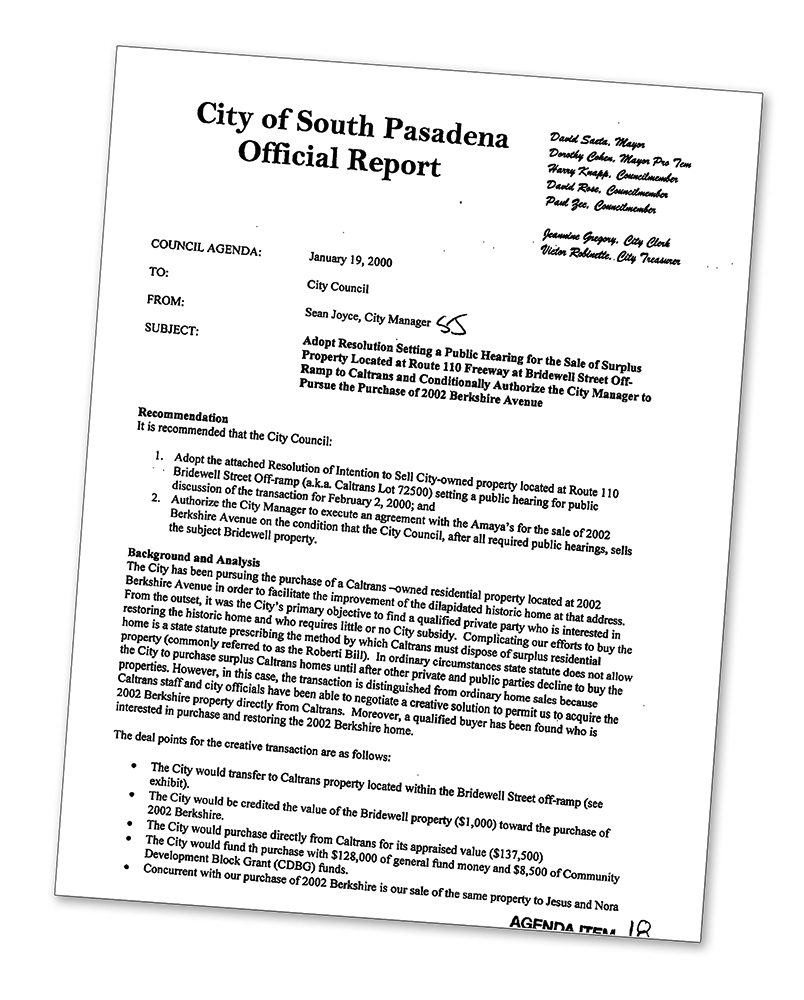
The rediscovered materials included:
-
A fully prepared outline and chart of a lawful, financially viable solution for the City to acquire CalTrans homes and simultaneously resell them to pre-approved long-term tenants.
-
A detailed graphic flowchart showing a two-escrow (or “double-escrow”) process specific to the Roberti Act.
-
Documentation of an actual successful case:
In 2002, South Pasadena purchased a CalTrans home on Berkshire Avenue using this exact model and immediately resold it to the long-term tenant — a fully executed, legally vetted transaction.
This is not theory.
This is municipal success in action — and it has been sitting unused since the updated presentation back in Aug. 2018.
What the rediscovery could mean:
The City has a previously implemented solution — tested, legal, and successful.
The Berkshire Avenue sale stands as proof that South Pasadena already knows how to acquire CalTrans homes and transfer them to tenants under the law.
The City was briefed on this model in 2018.
The SPPF presentation showed the pathway clearly and recommended it as a tool for exactly the situation unfolding today.
Yet the model has not reappeared in any recent public discussions. With the resurfacing of this documentation, the City may be able to act.
The Tenants’ Message to City Hall: “We Need Action, We Need You Now”
The CalTrans tenants South Pasadena asked for:
-
A fair, lawful, and transparent pricing system.
-
Independent audit and oversight, ideally through HCD.
-
Protection from displacement during the region’s post-Eaton Fire housing crunch.
-
City leadership willing to challenge CalTrans’ misconduct.
-
Utilization of existing tools — including the rediscovered acquisition model.
As tenant “Chuck” said:
“If nothing changes… what’s the difference if you at least give us more time to soften the hardship?”
‘The Fight’ is Not Over – Residents Want Their Homes Back
South Pasadena fought CalTrans for over 60 years and won the freeway war — a victory that literally saved the town. Everyone in South Pasadena owes a forever debt of service and gratitude to the decades long ‘Freeway Fighters‘.
Yet some the people who helped the city win — families who lived through the freeway threat, rent hikes, uncertainty, and decades of neglect — are now at risk of becoming unnecessary collateral damage in the final chapter.
Tenants, State legislators, legal experts, and investigative findings are clear:
-
The Roberti Act was intended to protect these households.
-
CalTrans looks to have lost respect of the spirit and the letter of that law.
-
South Pasadena actionable plans, proven, previously implemented pathway to intervene.
-
And the tenants are out of time.
The City of South Pasadena now faces a defining choice: Will it step into its historic role as fierce protector of their hometown — or stand by as CalTrans completes a displacement the freeway itself never accomplished?
Public Comments As Presented at South Pasadena City Council Nov 19, 2025
Page Phillips
Good evening Mayor, Councilmembers, and City Staff. My name is Page Phillips and I have lived in South Pasadena for 33 years…30 of those have been in our CalTrans house at 2042 Alpha Avenue. Thank you for your time and for giving us, the CalTrans Tenants, the safe space to speak tonight. We also want to express our heartfelt gratitude to Senator Sasha Perez for being here with us. Your presence means more to this community than you may realize.
Many of us here today are standing on the edge of losing everything because of an unfair, unlawful, and deeply unjust sales process created by CalTrans. For decades, literal decades, between 12 and 53 years, we have cared for these homes and built our lives around them; now we are being pushed out of the very neighborhoods we helped sustain.
In order to help us keep our homes, the Cal Trans Tenants are asking for your help in securing a fair and accessible pathway to remain housed. This means revised pricing that genuinely reflects the poor condition of many of these properties. We also ask that all sales be handled through the Department of Housing and Community Development, where oversight and fairness are more likely to prevail. We believe it is not unreasonable to ask for a thorough review of contract language and real tenant protections that prevent exploitation and displacement.
As you listen tonight to each one of these tenants’ vast and varied stories told with sincere voices—voices filled with fear, hope, grief, and determination—we ask you to remember we are from the city who fought for 60 years to keep the 710 extension out of this community…who won against all odds. We were called the little engine that could… the David against the Goliath and we ask you to go against that giant again to help us save our homes.
Thank you for listening to your constituents’ passionate pleas…we are aware the law does not prevail on emotion, but it does prevail on justice and nothing about this sales process has been just…we urge you to please change that.
Chuck
I’m Chuck Fata. My wife, Sharon, and I have lived in South Pasadena for 35 years. We’ve raised three children here and spent the last 19 years at our Caltrans rental. I wish I had time to talk about all the issues with the sales process, but I’d like to concentrate on the displacement of long-term tenants.
A few years back, I spoke to a staff member of State Senator Portantino. I was told that if we couldn’t buy, not to worry, we would be able to rent without a substantial increase. “No one is kicking you out,” is what I was told. In the last year, in my conversations with Veterans Group’s real estate broker, it’s obvious we don’t have any chance of renting the home if I don’t purchase at the offered price. I was told that’s the way it is and that sometimes you have to move when the owner wants you to.
We’ve patiently waited for years to buy, some tenants for decades, in a recurring process in which the price of our homes just kept escalating every time. We are now facing the fact that most of us can’t afford to buy if changes aren’t made in this sales process. More than likely, we will have to move during a housing shortage caused by the Eaton Canyon fire. There are too many people in the area now who can’t find housing, without us also getting displaced.
You and many other politicians at different levels can take control of this procedure and change it. That’s not wishful thinking, that’s a fact. I don’t know what we deserve, renting or buying, but I know it’s better than this. If I can’t buy even after you hopefully change this extremely unfair, unequal sales process, then at least give us more time to rent the home. You’ve waited over 60 years to get control of some of these homes. None of us want to leave our homes, and every one of us wants to own them. If you don’t change anything with the purchase opportunity, what’s the difference if you give us more time to help soften the hardship of a long-term tenant having to move?
Thank you.
Ally
For 15 years, this CalTrans property has been the only home my two children—both with disabilities—have known. And for 15 years, I have been a full-time healthcare worker, a single mother, working to keep a roof over their heads and serve our community.
We have been the model tenants. While Caltrans ignored this property—I did the maintenance. I fixed the leaks. I kept this house standing. I waited, because I was told that as a long-term tenant, I would finally get the opportunity to buy it at a reasonable price.
Now, after all this sacrifice, I am told the price for our duplex in South Pasadena is a minimum of $1.2 million. I can’t qualify for that loan. I can’t afford it. The going rate is not for me; it’s a financial wall built to keep me out.
But here is the most disturbing part: When I asked what happens when I fail to jump over that wall, I was told: ‘The property will be offered to the City of South Pasadena for a reasonable price.
Why? Why does the city get a ‘reasonable price,’ but the dedicated, long-term tenant—the mother, the healthcare worker, the community resident who put 15 years of her life and sweat equity into this home—is only offered a luxury market rate?
The Roberti Act—was meant to preserve, upgrade, and expand housing for people like me! It was meant to reward dedication, not penalize it. I am not asking for a handout. I am demanding the reasonable opportunity I earned. My children deserve a permanent home, and this policy must stop rewarding bureaucracy over the people it was designed to protect.
Ross
My wife has lived in a CalTrans ‘duplex’ in South Pas since 1998, and I’ve lived with her there for over 15 years. We’ve raised our 2 kids in South Pas in what is essentially a small 1 bedroom apartment, forgoing any other possibilities for home ownership to stay in the property we love and that we’ve always believed we would have the opportunity to purchase affordably, thereby missing out on decades of appreciation and equity building.
We’ve been in the affordable program for at least 15 years, and the 2nd unit of the duplex has been vacant and crumbling for at least 20 years, since CalTrans vacated it due to structural issues they deemed enough beyond repair to leave vacant for that long despite a housing crisis.
We feel we should have the opportunity to buy this property at the affordable rate since for all intents and purposes it has been a SFR for decades, but because there is technically a 2nd unit, we are only being given the option to buy it at fair market value, which we have no chance of being able to afford. Nor would we be likely to be able to afford to stay in South Pas – the city in which we’ve become deeply rooted, having raised our family here (with the youngest still in high school), and myself having been a dedicated AYSO volunteer referee for over 10 years, not to mention having spent thousands of dollars and countless hours over the past few years improving and tending the landscape of the property we’ve come to love, that was otherwise neglected and left as a mostly desolate dirt lot by CalTrans.
Marysia
In the ten years of being involved in this “so called” sales process, Caltrans has twice effectively deemed me“too poor to purchase” (a non issue since CalFHA offered 100% financing.) They then reversed that after our successful lawsuit & offered the “original price” per Roberti Bill.
However,their latest “offer” is laced with hidden “poison pill” mandates that effectively prohibit renting a room to my nephew or receiving any compensation other than my original purchase, while still paying all taxes, insurance and mortgage costs.
After telling us for over 40 years that we would be able to purchase our homes according to the Roberti Bill, District 7 keeps moving the goal posts and hiding behind “Emergency Rules” in Sacramento that they themselves have proposed to the Legislation.
When they bought these homes for pennies on the dollar back in the 70’s, they assured the cities that they were “not in the real estate business”. Now, since said real estate has greatly appreciated, they suddenly ARE in the real estate business.
Having now lived in and largely personally maintained my historic home over 50 years, Caltrans continuously dangles the promise of home ownership only to yank it away time after time, keeping us tied to promises that have never materialized.
District 7 seems to be a law unto itself with little to no oversight in Sacramento and it would appear that they are just waiting for us older tenants, who were in line for these purchases, to die.
We ask for your assistance in finally holding them accountable to the original intent of the Roberti Bill to sell to the long term tenants without further delay and we know that the cities have the authority to make this happen.
Thank you for your assistance with this urgent matter.
Suzanne
Good evening, Mayor and Councilmembers,
My name is Suzanne, and I’ve been a Caltrans tenant for 29 years. I’m here tonight to speak about my ongoing struggle to purchase my home from Caltrans through the State Route-710 sales program — a process that has spanned more than two decades.
In 2000, I entered into a Caltrans-approved market value sales contract. I paid my deposit, escrow was opened, and everything was moving forward. Then suddenly, Caltrans rescinded my contract, claiming the sale was “illegal,” but they never provided any legal documentation to justify that claim — not to me, not to my attorneys, and not to my elected representatives.
Adding insult to injury, my neighbor was allowed to complete her market value purchase one year earlier under almost identical circumstances. This shows clear inconsistency and unfairness in how Caltrans applied the law.
For over 21 years, I’ve continued paying rent and maintaining a home that should have been mine — while Caltrans’ process drags on with no transparency or accountability. Even today, my most recent sales contract has been sitting idle in escrow for over a year while I’m told there are “35 escrows ahead” of mine — VRG has admitted that they have only closed 5 escrows so far this year. With 35 escrows ahead of mine, if this is allowed to continue I will not close escrow for 7 years. (Section 26) of the sales contract is titled “Time is of the Essence” — indicating that Delays = Breach. This should apply not only to the tenants but to Caltrans as well.
This is not just a personal grievance — it reflects a systemic failure of process and transparency — it’s a matter of fairness, equity, and good governance. I respectfully request an independent audit of Caltrans’ SR-710 home sales program, and that all future sales, repairs, and escrow completions be transferred to the Department of Housing and Community Development, an agency that has the expertise, oversight, and accountability to handle affordable housing transactions fairly and lawfully.
It’s time for CalTrans to be held accountable, and for this community to see long-overdue justice.
Thank you.
Cynthia Mata Flores
Good evening, everyone. My name is Cynthia Mata Flores. I currently live at 1617 Fremont in South Pasadena. I lived at 2028 Berkshire for 24 years, from 1992 until 2016, when we were forced to move out. In 2012, the State Auditor conducted a forensic audit of Caltrans and found it guilty of widespread graft and corruption. Still, none of the offenders faced any consequences.
No one was fired or reprimanded. Instead, CalTrans, upset that tenants had given the LA Times the information that led to the audit, used it as an excuse to raise our rents by 10% every six months, or 21% annually. Our rent increased from $1,400 to $2,400 in just three years. My husband and I had no choice but to move, leaving two daughters and two Grandchildren.
In 2017, during Phase 1 sales, my daughter Angela Flores and two other tenants sued CalTrans because CalTrans arbitrarily inflated the price, making it 14 times higher than what the house should have sold for. Our lawyer, Chris Sutton, eventually won that case. However, in what feels like retribution, all three plaintiffs are now being disqualified or forced to purchase at a higher price than the legal Roberti Bill price.
CalTrans is a rogue organization that acts and believes as if it is above the law. Caltrans also considers the Roberti Law to be unconstitutional. When it cannot change the law through legislation, it uses regulations to interpret the law against tenants. These regulations are, in fact, illegal.
We need an audit focused on the sales process, with the outcome that an alternative state agency takes control of the sales process.
Roberto Flores
Hello everyone, thank you, Senator Perez, for taking an interest in our 60-year battle with CalTrans. I will mention here some of the most important developments at this juncture in our 60-year battle.
CalTrans is a slumlord that neglected these houses for 60 years. It now dares to condition the sale by including “house repairs” on an illegal formula used to disqualify Tenants.
Caltrans has consistently shown that it considers the tenants to be grifters and system gamers demanding a gift of public funds. The disdain and disrespect of tenants is upfront and explicit.
The truth is that the purchase of these homes is a shared equity program, so that when the state, through CalHFA, there is no loss of funds.
All tenants, even those who have very low incomes, have paid the original price of the house several times over. The Roberti Law was enacted in 1979 to mitigate -mitigate harm done when eminent domain or its threat, harmed the communities. In many cases, it was war veterans who, through the GI Bill, purchased these homes and made up these stable communities, which CalTrans destroyed.
The intent and structure of the Roberti Bill were to ensure that all tenants — everyone — could afford to buy their homes. If they are paying rent today, which is based on 30% of their income, they should be able to afford a purchase because their mortgage should be about the same.
CalTrans’s primary motive to disqualify is an excuse not to sell to the tenant and therefore not to do the repairs.
We call for CalTrans to be removed from the sales process and for the sales process to be assigned to another state agency, such as the Department of Housing and Community Development, to take charge of the sales process.
Dennis
First of all, I am a resident of South Pasadena.
Secondly, I am a tenant of CalTrans.
Thank you for giving us the opportunity to be heard. Many of us have lived in these homes for years. My family moved in to one of the homes in 1996.
Our children attended the local schools, we’ve participate in community events, and we’ve contributed financially to support education and civic organizations. We are part of this community just as much as anyone else.
We are now being forced to compromise our lives. While we join in celebrating the end of the 210 freeway extension, we do not feel we are being treated with honesty, openness, or transparency. We have many questions and concerns, and we are looking to the strong leaders in this community to help ensure that those concerns are addressed.
The decision about what each resident of a Caltrans-owned property must do moving forward ultimately rests with the individual. But we hope to make those decisions with full knowledge of the law, the process, and—with the respect—that everyone deserves when their lives and homes are at stake.
We are not asking for anything more than what any person in this room, on this council, or in this city would expect: clear communication, fairness, and respect—things we simply do not feel we are receiving from Caltrans at this time and that we must advocate for as tenants. Simply Transparent communication and reliable timelines, so we are not left in confusion and uncertainty.
Thank you.
Linda
My name is Linda. I have lived in South Pasadena for about 35 years. I’ve been a lawyer for almost 40 years and recently I became a real estate agent. I’m involved in this process because I have been trying to help a friend.
Through that involvement, I have come to know just a few of the people who are being impacted by the Caltrans situation, and what has happened to them. I have been appalled by what sounds like an incredibly inconsistent, unpredictable, confusing and atypical process. I urge the elected representatives here to do everything in their power to help these neighbors, who are simply trying to stay in their homes.
From what I have seen, there is a lack of typical California residential real estate transaction guardrails – disclosures, representation, negotiation. All things that can help protect people on one of the biggest financial decisions in their life.
There also seems to be a lack of information available as to what will happen if someone does not purchase their home. So, people are being asked to decide whether to purchase or not, without knowing whether they will be able to stay on as tenants, and if so, at what cost and under what terms.
Please, do whatever you can to create an evenhanded and transparent process to help our neighbors stay in their homes.
Andrea
My name is Andrea. My family has lived in South Pasadena for 14 years. We are market-rate tenants who have tried, in good faith, to purchase our home from Caltrans under the SR-710 program. What we’ve experienced is a systemic failure.
In 2016, we signed a conditional offer of sale. Caltrans ordered an appraisal, required affidavits and financials, and told us we could not own any other property even as market rate tenants. We followed every rule. And then — Caltrans disappeared for five years.
During those years, state law required Caltrans to sell homes “without undue delay.” Instead, those delays caused the price of our home to skyrocket while the property deteriorated under Caltrans’ neglect — electrical hazards, plumbing failures, and foundation damage — despite their legal obligation to maintain the home in habitable condition.
When Caltrans finally reappeared in 2021, they reappraised the home at a much higher price. We paid for our own appraisal, which was roughly $225,000 lower. Then Caltrans told us again to wait while rules changed. We have paid for inspections, an appraisal, and repair estimates — only to be told again that the process has changed.
A comparable Caltrans home sold in 2024 for nearly $100,000 less than what Caltrans said our home was worth in 2021. The system is inconsistent, inequitable, and opaque.
Today, nine years after Caltrans asked us to prepare to buy our home, we still have no contract, no reliable price, and no clear process — only repair estimates approaching half a million dollars, higher interest rates, no property to roll into the sale, and a State agency that keeps shifting the rules.
We are a family being priced out and potentially displaced because of bureaucratic mismanagement. The spirit of the Roberti Act was to prevent displacement, not create it. We are asking for fairness, consistency, and a process that honors the law’s intent: to give legitimate occupants a real chance to buy their homes.
We want to stay in our community. We want an honest path to homeownership. And we need your help to ensure that the original legislative intent — preventing displacement — is not lost in a maze of delays and contradictions.
Thank you.
Joseph
I am a lifelong caltrans tenant. I have lived here my entire life, only leaving briefly for college. Because of that, I’ve grown up witnessing firsthand the unethical behavior and blatant misconduct that Caltrans has repeatedly carried out against tenants like my family.
What we are experiencing today is not new, it is simply the latest in a long pattern of surreptitious actions. For years, Caltrans has hidden information, added questionable fees, refused to make proper repairs, and relied on the same contractors to cover up problems rather than fix them. This has been the norm.
Throughout the sales process, I served as the primary point of contact. Every document requested was provided by me. Every call, every email, every form, they all went through me. That is, until the most important moment: the point of sale.
In a familiar and deceitful pattern, Caltrans abruptly stopped communicating with me and instead began contacting my younger sister—someone who had never been involved in this process at all. They left letters and messages that she naturally did not check, and they failed to contact me or my mother, who is also a tenant.
When we asked why the communication suddenly shifted, there was no clear explanation. Instead, we were told, “Well, we sent two letters and made one call.” One of those letters informed us that our application was denied due to income—a reason that is not only inaccurate but illegal. And I had no opportunity to respond because I never received that notice.
This is exactly the kind of opacity and mistreatment that tenants have endured from Caltrans for decades. We deserve transparency. We deserve fairness. And we deserve to be treated with basic respect—not deceived during a process that determines the future of our home.
Thank you.
Chris Patterson
We live at 1724 Gillette Crescent in South Pasadena. It’s been our one and only home for close to thirty years. Our two sons were born and raised here. We’d like to believe that we’ve added to this community.
For all these years, we were told that we would be able to purchase our home. In fact, both our neighbors purchased their homes. Yet CalTrans keeps us in the dark. We have no idea what is actually happening for us.
We’ve put a lot of time, energy, and money into our home. We’ve landscaped the front and back yards and made numerous repairs.
About fifteen years ago, we noticed that the concrete stairway that leads up to our front door and porch, and the porch itself, was/and is deteriorating and slowly separating from the house. For at least the past decade, we have been complaining about this at our annual CalTrans’ inspections.
We’ve sent our agent photographs of the cracking and disassembling walls and support pillars. One person who came by from CalTrans saw the deterioration and hesitated to even walk up the stairs.
About a year ago, Cal Trans sent out a crew to look at the house. Within moments, they determined the problem was beyond their capacity, and that the repairs needed to be dealt with by an engineer. Since then, we’ve heard absolutely nothing.
The latest incident, when two employees from Veterans Reality came by, they, too, were alarmed at the state of the stairs and front porch. Is this why we don’t get an offer? Because CalTrans doesn’t want to spend the money to repair the problem? And what kind of danger are we in? We don’t know.
Chris Patterson
Victoria Patterson
Cole Patterson
Ry Patterson