
















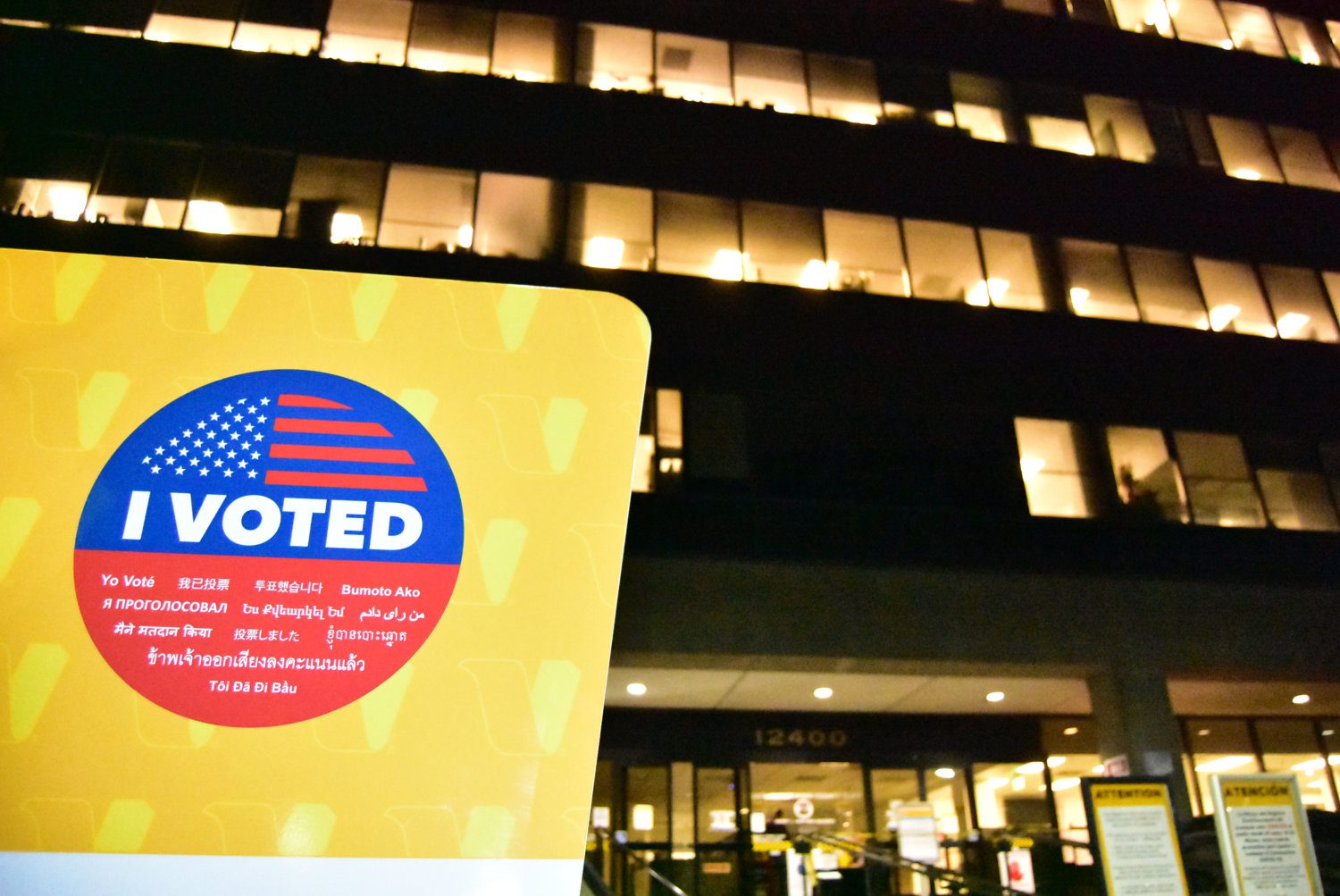

It is Wednesday afternoon, June 3. The polls closed last night. And as of this writing, the votes from Tuesday’s primary have yet to be fully counted — the last update most of us saw landed somewhere around two in the morning, and the numbers have barely moved since. Refresh, wait, refresh again. The comment sections are lit-up across the foothill cities, from South Pasadena to San Marino to Highland Park and down into a Los Angeles.
One side is certain the count is being slow-walked to hide something. The other side is certain that anyone asking questions is an enemy of democracy. Both sides are mostly wrong, and both sides are screaming it in all caps.
So before the next forwarded screenshot lands in your group chat, let’s do something unfashionable. Let’s talk about what is actually true.
Because quietly — six days before you went to the polls — California changed the rules that govern this exact moment. The law is called Senate Bill 73. Almost nobody reading this knows what it says. Plenty of people are willing to fight about it anyway. This is our attempt to clear the smoke.
What just became law – SB 73
Governor Gavin Newsom signed SB 73 on May 27, 2026. It was authored by State Senators Sabrina Cervantes and Tom Umberg, it passed as emergency legislation, and it took effect immediately — which means it was live and binding for the votes being counted right now.
Let’s be honest about where it came from, because that origin is exactly why many Californians already distrust it. SB 73 was sold, explicitly, as a wall against federal interference — a response to the current Federal administration’s threats to send law enforcement near polling places and to challenge results it doesn’t like. The Governor’s office framed it in those terms. The co-sponsors framed it in those terms. If you suspect a law marketed as “stopping the other team” might be written to advantage the team that wrote it, that suspicion is reasonable. Hold onto that. We’ll come back to it.

But a law’s marketing and a law’s mechanics are two different things. And the mechanics of SB 73 are narrower, and more sensible, than either the cheerleaders or the conspiracy theorists are telling you.
How it actually works
Strip away the press releases and SB 73 does four concrete things.
First, it requires a court order before law enforcement can touch the voting machinery. No officer — local, state, or federal — can access, disrupt, modify, or seize a voting system, its software, or its source code without a judge signing off. For voter rolls and voter lists, there’s a narrow second door: access is also allowed to investigate a specific category of voter fraud defined in existing law. But for the machines themselves, it’s a court order or nothing.
Second, it bars peace officers from interfering with election administration — from getting in the way of election workers doing their jobs — except in a genuine public-health or public-safety emergency.
Third, it orders the state Department of Justice to write clear guidance for county election officials on how to respond when law enforcement shows up asking for access to areas where ballots are handled. In other words: nobody has to improvise at the counting table at midnight.
Fourth, it makes it a crime to physically remove a package of voted ballots from the custody of an elections official. The penalty is up to three years in prison, a $1,000 fine, or both, with civil penalties reaching $50,000.
Read those four again and notice what they share. SB 73 is not about the voter. It is not about the observer. It is not about you, the citizen with a concern. It is about one specific actor: armed law enforcement physically taking control of ballots and machines on its own say-so. That’s the thing the law is built to stop. Whether you think that thing needed stopping is a fair debate. But let’s at least argue about what the law does, not about what a meme told you it does.
To the people yelling “cover-up”
Here is the part the “they’re hiding something” crowd needs to hear, and it is going to disappoint you: SB 73 did not take away a single one of your ways to report a problem.
If you witnessed something wrong at your polling place — intimidation, a malfunctioning machine, ballots handled in a way that made your stomach turn — every channel that existed last week still exists today. You can file a complaint with your county registrar. You can call the Secretary of State’s Election Fraud Investigation Unit. You can submit the state’s Election Voter Complaint Form. You can go to your district attorney, to the Attorney General’s office, to the FBI, to the Department of Justice’s civil rights division. None of those doors were closed by SB 73. Not one.
And the deeper fear — that the evidence will simply vanish while everyone stalls — does not survive contact with the law either. Ballots in California must be kept unopened and unaltered for six months after a state or local election. For any federal contest, federal law stretches that to twenty-two months. The ballots from last night are not going to evaporate. They will sit in sealed, inventoried custody for the better part of a year, their every movement logged. “On the move” is not the same as “unaccounted for.”
There is even a path to force those sealed ballots back open after the election is certified. A county’s board of supervisors or its grand jury can ask the district attorney to petition a judge for a public recount. Any voter can file a formal election contest in superior court, and at that trial the ballots are physically opened and recounted in front of all parties. Certification is not a tombstone. It is not the end of the story.
So no — the system is not designed to make scrutiny impossible. The evidence is preserved. The complaint lines are open. The courthouse door is unlocked.
To the people yelling “democracy is saved!”
Now the other side gets its turn, because you have been just as smug and just as wrong.
SB 73 did not seal democracy in glass. The pathway to actually examine ballots and overturn a bad result is real, but it is narrow, slow, and stacked against the person walking through it. Three problems matter.
The standard of proof is punishing. To win an election contest in California, you don’t just have to raise a doubt — you have to prove your case by clear and convincing evidence, and the courts operate under an explicit instruction to validate the election if it is at all possible to do so. The thumb is on the scale toward letting results stand. That is a deliberate choice, and it means honest mistakes can survive challenge simply because the challenger couldn’t clear a very high bar fast enough.
The clock is brutal. The district-attorney recount route requires a petition within twenty-five days of the election. Election contests carry their own short fuses. If a problem is subtle — if it takes longer than a few weeks to even surface — the window can slam shut before anyone fully understands what happened.
And the gatekeepers are insiders. The recount-petition path runs through the board of supervisors or a grand jury, then the DA, then a judge. A lone whistleblower or a single sharp-eyed observer cannot trigger it alone. The one door genuinely open to an individual voter — the formal election contest — is expensive, fast-moving, and demands that high standard of proof. You cannot simply walk in and ask to inspect the ballots; courts have repeatedly refused to let private citizens do that outside the formal process.
Put those three together and you get the uncomfortable truth nobody chanting “our elections are perfectly secure” wants to say out loud: a legitimate but slow-developing problem — one that emerges gradually, lacks an institutional champion, and can’t meet the clear-and-convincing standard before the deadline — can slip through. Not because the evidence disappeared. Because the threshold, the clock, and the gatekeeping can outrun a slow, honest concern.
That is a real gap. It existed before SB 73, and SB 73 didn’t fix it. Anyone telling you the system is airtight is selling something.
The Sheriff Bianco Problem
You cannot talk about this law without talking about the man who, more than anyone, caused it to be written. So let’s use him as a case study — carefully, because the lesson is more complicated than either side wants.
In February, Riverside County Sheriff Chad Bianco — who is, not incidentally, a Republican candidate for governor — seized more than 650,000 ballots from his county’s election office. He was acting on a claim, raised by a citizen activist group, that there was a roughly 45,000-vote discrepancy between the handwritten logs poll workers filled out and the machine count from last November’s special election on redistricting. The county registrar said the discrepancy was a mirage: the handwritten logs were rough tallies kept by temporary field workers, the machine count was what got certified, and the two were never meant to match to the ballot.
Here is the detail that should matter to a skeptic and a believer alike. When the search warrants behind the seizure were later unsealed, they did not show direct evidence of fraud. Reporting on those warrants found that Bianco’s investigators had no insider tipster, no witness, and no independent forensic analysis when they asked a judge to let them take hundreds of thousands of ballots. They had an allegation of a discrepancy. They did not have evidence of a crime. And in our system, that distinction is the whole ballgame — the Attorney General’s central argument was that Bianco never identified a specific crime, which is the necessary predicate for a search warrant in the first place.
There’s a proportionality problem, too, and it deflates the most dramatic version of this story. The redistricting measure passed statewide by more than three million votes. The result in Riverside County was not close. Even if every bit of that alleged 45,000-vote gap were real, it could not have flipped the outcome. There was no result hanging in the balance to rescue — which makes the theory that powerful people were terrified he’d “find something” hard to sustain. There was nothing there to overturn even in the best case for the allegation.
And the entity that stopped him was not a backroom or a political boss. It was the California Supreme Court, which voted unanimously to take the case and ordered the review paused. Tellingly, Bianco himself said he was “technically very happy” with the ruling. That is not the posture of a man muzzled an inch from a smoking gun.
“Don’t do a good thing that looks bad”
There’s an old saying in Spanish: No hagas cosa buena que parezca mala. Don’t do a good thing in a way that looks bad.
It is tempting to read the Bianco episode as proof that the system crushes anyone who dares to ask hard questions. But the proverb points the other way, and it points at him. For a man who holds public trust — and who, on top of that, is running for the state’s highest office — seizing 650,000 ballots was guaranteed to look like a campaign stunt no matter what was in his heart. The wisdom of that old line isn’t “ignore appearances.” It’s the opposite: if a good and necessary thing can only be done in a way that reeks of self-interest, then put it in a cleaner hand. Hand it to a grand jury. To a neutral special master. To a district attorney with no name on the ballot. There were lawful, less compromised ways to chase that discrepancy. He chose the one that made a thin case look like a power grab.
So strip Bianco away and a real question is still standing — the question this whole conversation keeps circling back to. Who gets to look? On what threshold? And is that gate controlled by the very people running the elections? That question is legitimate. Bianco was simply the wrong man to carry it, asking in the wrong way, at the worst possible moment for his own credibility. You can believe the question deserved a serious answer and still believe he botched the asking. Both things are true.
Where this leaves us
Here is where this newspaper lands, and we’ll say it plainly.
We are skeptics of SB 73 — less because of what it does than because of where it comes from. A law marketed as a partisan shield, passed on an emergency timeline by the same party that controls every lever in Sacramento, days before an election, has earned a raised eyebrow. That instinct is healthy. Keep it.
But skepticism is not the same as denial, and honesty demands we say the rest. SB 73 works in both directions.
The next sheriff who decides to seize ballots will be a Democrat in a red-leaning county somewhere, or a partisan of any stripe in a town nobody’s heard of, chasing a result in a city council race decided by forty votes. When that day comes, this law will constrain that officer exactly as it constrained Bianco. A rule that only bites your enemies isn’t a rule; it’s a weapon. This one, for all its political packaging, cuts the same on both edges. It genuinely does curb the weaponization of local law enforcement during elections — and it does it for the small races, the ones for school board and city council that actually shape daily life in South Pasadena and Alhambra, not just the marquee fights.
What we cannot accept is the pretense that the pathway it leaves behind is good enough. It is not.
The lawful route to examine ballots and correct an issue is too slow, too expensive, too high a bar, and too dependent on insiders deciding to act. The fix for that is not a motivated Sheriff with a warrant and a campaign to run. The fix is to make the legitimate pathway faster, cheaper, and harder for any single faction to capture — so that the next honest person with a real concern doesn’t have to choose between doing nothing and doing something that looks like a crime.
So tonight, as you might be hitingt refresh one more time and the numbers crawl, you can know this much: the thing standing between your suspicion and genuine chaos is a set of rules. They are imperfect. They are slow. They were written by people with motives. And they are still, for now, the difference between a democracy that argues and a democracy that disintegrates.
Count the ballots. All of them. Then let us argue about the result like citizens — loudly, stubbornly, and on the facts.
The South Pasadenan welcomes letters and responses to this editorial. The facts cited above are drawn from the public record as of publication; the opinions are our own.