


















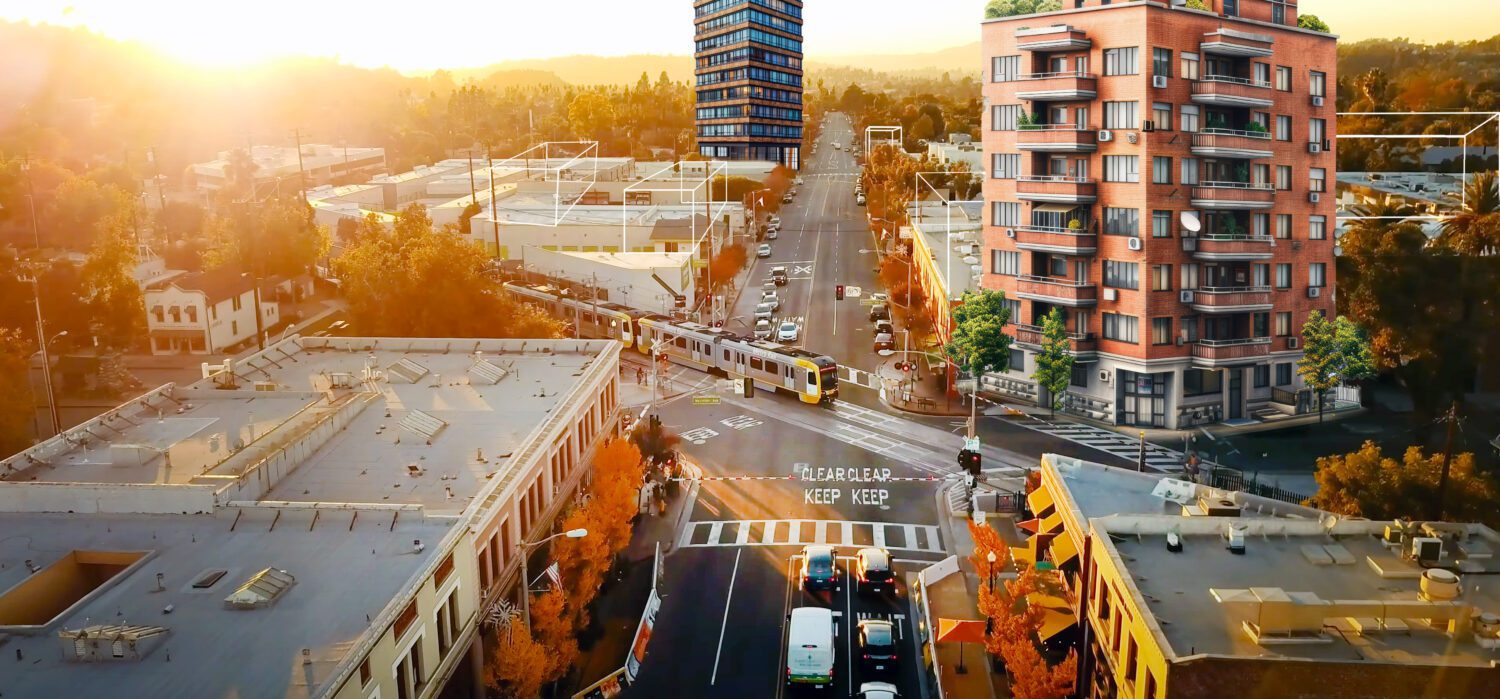

The ‘Abundant and Affordable Homes Near Transit Act‘ (SB 79) takes effect July 1, 2026. Here is the picture for South Pasadena, Pasadena, and the San Gabriel Valley generally — what the law mandates, what South Pasadena City staff says we can do about it, and what is at stake when 100 dwelling units per acre and 65-foot heights become the legal default around the Mission Station.
Stand on the platform at the South Pasadena Metro station — the one most of us still call Mission/Meridian — and look around. The Metro transit plaza was paid for in part with city money the residents agreed to spend on “betterments”: better materials on the platforms, better landscaping, the lighting, the ‘Walking Man’ art piece by Michael Stutz.
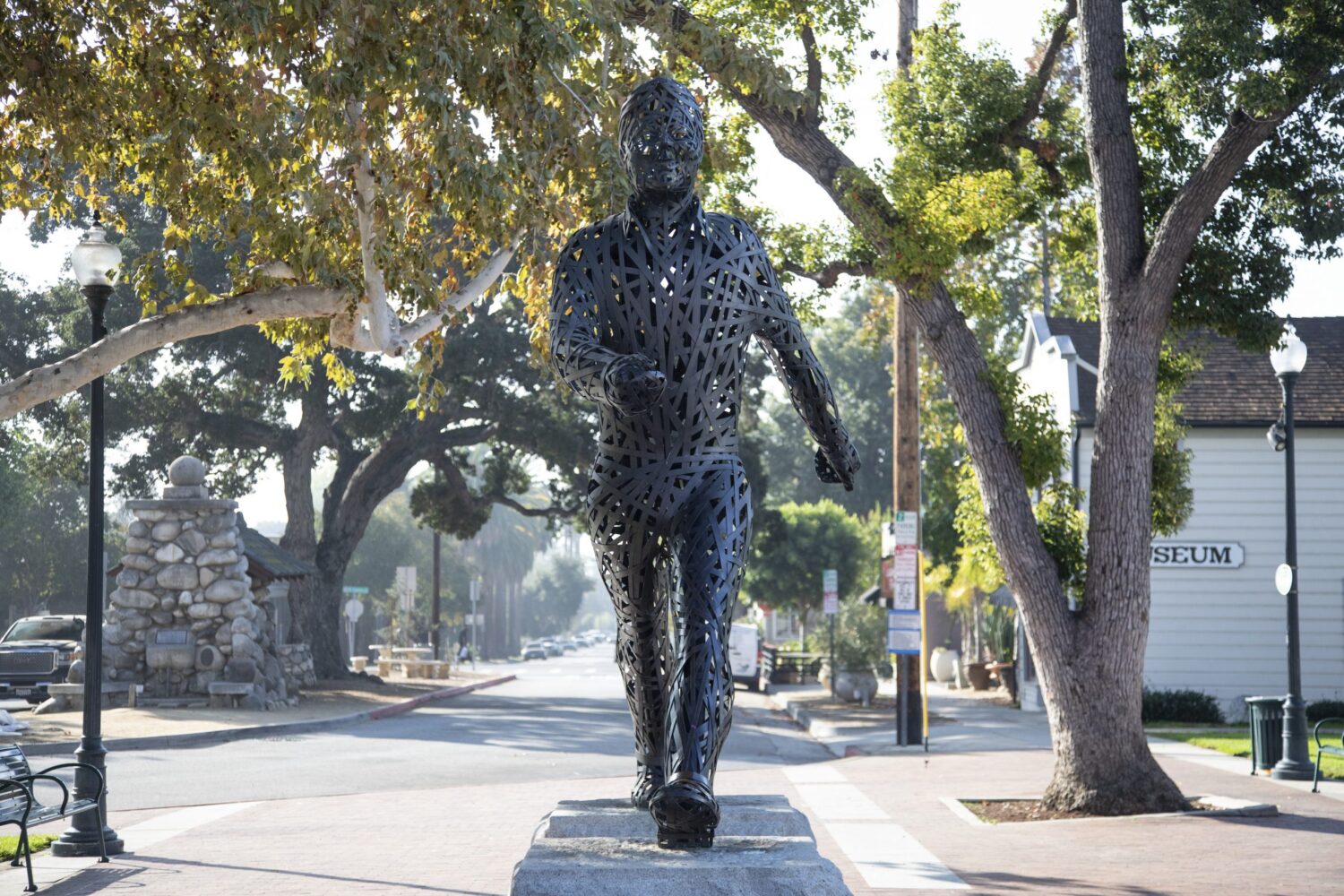
The Meridian Ave/Museum/Metro Grounds hosts the Thursday farmers market and multiple civic museum events . Across Mission Street is the National Register Historic District, the original commercial heart of the city that grew up alongside the railway in the 1880s. Walk a quarter-mile in any direction and you are still in primarily single-family streets — Craftsman bungalows, mature street trees, the canopy that gives South Pasadena its reputation, and official ‘Tree City USA‘ designation, as the City of Trees, with more than 21,000 of them lining the public right of way.

That quarter-mile circle that SB 79 wants is now the single most consequential piece of geography in the city’s near future.

On October 10, 2025, Governor Gavin Newsom signed Senate Bill 79, the ‘Abundant and Affordable Homes Near Transit Act’, authored by State Senator Scott Wiener of San Francisco. The law takes effect July 1, 2026. By its plain operation, every parcel within a quarter-mile of the South Pasadena station — residential, commercial, mixed-use — becomes eligible by right for buildings up to 65 feet tall at a density of at least 100 dwelling units per acre. Within 200 feet of the station’s pedestrian access points, an “adjacency intensifier” pushes the legal floor to 85 feet and 140 dwelling units per acre. State law overrides South Pasadena’s zoning code in that circle. The Council can shape implementation. It cannot opt out.
The political fight over the bill is over. The implementation fight is just beginning, and South Pasadena is at the center of it.
This is the baseline. A second piece will follow on the back-and-forth among city officials, the regional response, and what insiders are saying behind the scenes. For now: what the law actually does, what city staff has put on the table, and what the next nine months look like for a town that has already been through Measure SP, the CalTrans homes, and three decades of state housing-law expansion.
What SB 79 Is, in One Pass
SB 79 was introduced in January 2025 and passed the Legislature on Sept. 12, 2025, after a three-attempt arc that began with Wiener’s SB 827 in 2018 and SB 50 in 2019, both of which died. Newsom called it part of “the most significant year for pro-housing reforms in the history of California.”
The mechanic is straightforward. The bill creates a new chapter of the Government Code (sections 65912.155 through 65912.162) that establishes statewide minimum zoning standards within walking distance of major transit. The radius is generally one-half mile. The new standards override any conflicting local height limits, density caps, and floor-area ratios. Housing is an “allowed use” in those zones on land zoned for residential, mixed-use, or commercial development.
The bill establishes three tiers of transit-oriented development stops:
Tier 1 — heavy rail or very high-frequency commuter rail.
Tier 2 — light rail, high-frequency commuter rail, or bus rapid transit.
Tier 3 — frequent commuter rail, ferry, or other major transit stops as designated locally.
The South Pasadena station, on the Metro A Line (the former Gold Line, absorbed into the A Line when the Regional Connector opened in June 2023), is a Tier 2 stop. So is every Metro A Line station in Pasadena — six of them, from Fillmore through Sierra Madre Villa. So are the four planned Tier 2 stops along the proposed North Hollywood-to-Pasadena Bus Rapid Transit corridor: Arroyo Parkway/Holly, Colorado/Los Robles, Colorado/Lake, and Colorado/Hill.
For a Tier 2 stop, the statewide standards are: (‘du’ means ‘dwelling units’)
| Distance from stop | Minimum height | Minimum density | Minimum FAR |
|---|---|---|---|
| Within ¼ mile | 65 feet | 100 du/acre | 3.0 |
| ¼ to ½ mile | 55 feet | 80 du/acre | 2.5 |
| Within 200 feet (intensifier) | +20 ft (85 total) | +40 du/ac (140 total) | +1.0 (4.0 total) |
South Pasadena is below the 35,000-population threshold, so only the ¼-mile ring applies. The intensifier band is additive — within 200 feet of station entries, height rises by 20 feet, density by 40 du/acre, FAR by 1.0.
There is one quirk that matters specifically for South Pasadena. Because the city’s population is below 35,000, only the quarter-mile ring around the Mission Station is subject to SB 79’s standards. The half-mile band — which would otherwise cover much of the city’s western flank toward the Arroyo and the eastern edge approaching Garfield Avenue — does not trigger the bill’s provisions. That is a real reprieve, and it is the only meaningful population-based concession in the legislation.
Pasadena gets no such reprieve. Every one of its six A Line stations triggers the full half-mile radius, and four BRT stops will likely add four more concentric circles to their map.
The South Pasadena Footprint, Zone by Zone
This is where the city’s own analysis becomes essential. On Jan. 14, 2026, the City Council and Planning Commission held a special joint study session on SB 79. The agenda report, prepared by City Attorney Roxanne Diaz and Community Development Director Erika Ramirez under City Manager Todd Hileman, contains the most thorough public accounting yet of what the law means for South Pasadena. The city’s GIS consultant produced four overlay maps. They show, in crisp detail, what changes on July 1, 2026 in the quarter-mile circle.
The numbers are striking when laid against current zoning:
– Residential Low Density (RS) — the standard single-family designation, the zone of most residential streets in the affected ring — currently allows 5 dwelling units per acre at 35 feet. Under SB 79 it must allow 100 dwelling units per acre at 65 feet. That is a 20-fold increase in allowed density and a near-doubling of the height limit.
– Altos De Monterey (AM) — currently 3 du/acre at 25 feet — becomes 100 du/acre at 65 feet.
– Residential Estate (RE) — 3 du/acre at 35 feet — becomes 100 du/acre at 65 feet.
– Residential Medium Density (RM) — 30 du/acre at 45 feet — becomes 100 du/acre at 65 feet.
– Residential High Density (RH) — 45 du/acre at 45 feet (or 70 du/acre with the Housing Overlay) — becomes 100 du/acre at 65 feet.
– Mixed Use Core (MUC) — 70 du/acre at 55 feet under the post-Measure SP rules — becomes 100 du/acre at 65 feet, and within the 200-foot intensifier zone, 140 du/acre at 85 feet.
– Commercial Office (CO) & Commercial General (CG) — currently 0 du/acre — become 100 du/acre at 65 feet for any qualifying housing project.
The Mission Street National Register Historic District — the city’s original 1880s commercial core, designated in 1982 — sits squarely inside the ¼-mile ring. Portions of the city’s hillside parcels, identified by Cal Fire in 2025 as within the Very High Fire Hazard Severity Zone, also intersect the broader half-mile area. Both facts will matter when we get to what the city can do about any of this.
The city report, with characteristic understatement, calls SB 79 “complex, and at times imprecise.” The phrase is doing a lot of work.
‘Measure SP’ (Building Height Limits), It’s Meaning Now
To understand why Council and most residents are watching SB 79 with a particular air of dread, you have to go back to last November 2024.
In November 2024, South Pasadena voters passed Measure SP, lifting the long-standing 45-foot voter-imposed height limit in commercial and mixed-use zones and authorizing the City Council to set higher height limits in those corridors as needed to satisfy the state-approved Housing Element. Single-family neighborhoods kept their 45-foot cap. The argument the city made — and the case then-Councilmembers Michael Cacciotti, Jon Primuth, and Janet Braun all supported in some form during that cycle — was that Measure SP put the city on a path to meet its Regional Housing Needs Allocation under its own governance, on its own corridors, by its own design.
Sheila Rossi, then a Council candidate on the same November 2024 ballot and now serving as Mayor, did not publicly endorse or oppose the measure during the campaign. After her election, Mayor Rossi worked directly with State Senator Sasha Pérez and Assembly Member Mike Fong and other Sacramento officials to help secure two of the only meaningful concessions in SB 79’s final text: the under-35,000 population threshold that limits the bill’s reach in cities like South Pasadena to the quarter-mile ring rather than the full half-mile, and the Local Alternative Plan mechanism itself — Option C in the city’s staff report — which exists in the bill in part because Measure SP had already pioneered the concept. South Pasadena’s voters had built the original alternative plan before Sacramento codified the term. No other city in California had one at the time.
Critics warned that Measure SP effectively shifted height-limit authority from voters to City Hall. Supporters said it was the responsible compromise: meet the state’s mandate without surrendering local discretion entirely. The voters chose the compromise. The Housing Element, with its programs and its inventory of sites, was the deliverable.
Less than a year after Measure SP passed, SB 79 was on the Governor’s desk. And SB 79 does not honor the trade-off Measure SP established for South Pasadena voters. It applies its quarter-mile rule on top of the local framework, in the same single-family neighborhoods Measure SP had explicitly preserved, with state-set densities and heights that exceed what the city’s own post-Measure SP regulations contemplate. The Mixed Use Core zones the city set at 100 du/acre and 65 feet under its post-SP rules become 140 du/acre at 85 feet within the intensifier band. The single-family RS zones that Measure SP shielded entirely are, under SB 79, the zones with the largest proportional change.
That is the credibility problem residents keep raising. Measure SP was the negotiation. SB 79 is what came after the negotiation closed.
The CalTrans Homes Sales Grind, The Catastrophic Eaton Fire, and The Developers Question
There is a parallel story unfolding in the same quarter-mile, and it cannot be told separately from SB 79.
The 66 Caltrans surplus homes scattered through South Pasadena are the legacy of the failed SR 710 freeway extension — the freeway South Pasadena spent more than half a century fighting, even with the 1973 injunction stopped CalTrans from buying or demolishing more homes. Senate Bill 381, authored by then-State Senator Anthony Portantino, gave the city the authority to acquire those properties at CalTrans’ original mid-century purchase price and resell them, with a portion of proceeds dedicated to creating affordable housing units — three affordable units for each property sold.
The first batch of sales went to multiple bids, the vast majority for over $1 million, according to Dave Way of the Dave Knight Real Estate Team, the city’s real estate agent. Many of those bids came from corporations, partnerships, and LLCs rather than individuals. Mayor Diana Mahmud at the time emphasized accountability: how the city makes sure what is acquired as affordable housing property remains affordable housing property. The South Pasadena Preservation Foundation (SPPF), which holds preservation covenants on several historically significant Caltrans properties, raised concerns about handing the stewardship of formerly publicly held housing to private entities with limited oversight.
That was already the conversation before Jan. 7, 2025, when the Eaton Fire tore through Altadena and Pasadena. Reporting since has documented an unusually fast market in Altadena’s burn zone, with a documented surge in cash and corporate purchases of damaged or destroyed lots. Statewide data show foreign buying activity has ticked up since spring 2025. Ownership in much of this activity is opaque — it shows up in title records as LLCs, not persons’ names.
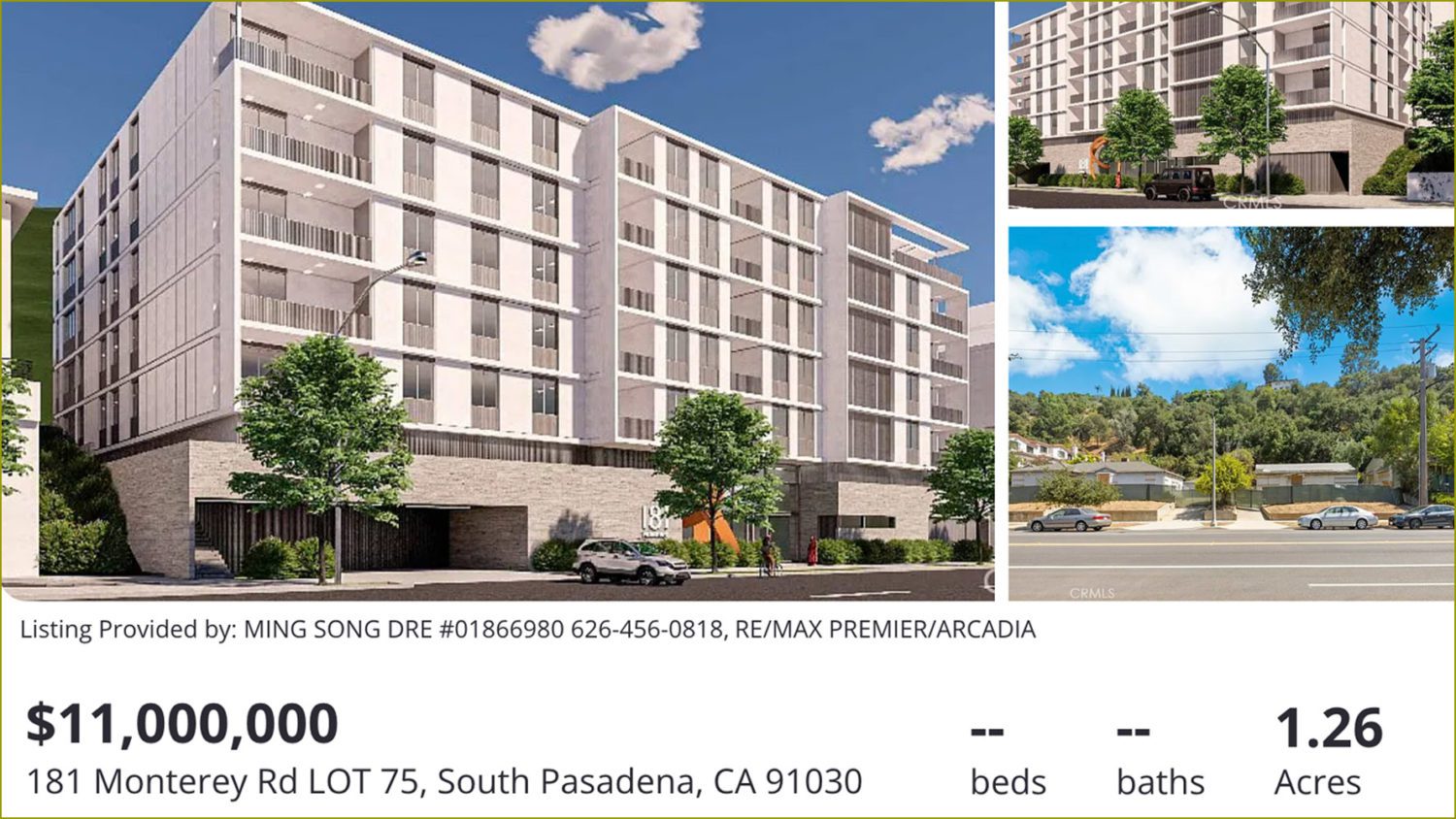
SB 79 does not cause developers to build. But SB 79 substantially increases the value of land within a quarter-mile of every Tier 1 and Tier 2 transit stop in the urban transit counties, by lifting the legal ceiling on how many units a parcel can produce and how tall the building can be. Land assembly along Mission Street, El Centro, Fair Oaks, Meridian, and the residential streets between them just became more valuable. The affordability requirements built into SB 79 — 7% extremely-low, 10% very-low, or 13% low-income units, calculated before any density bonus — apply only to projects of more than 10 units. A nine-unit infill project on a single-family lot has zero affordability obligation under the bill.
This is not a thought experiment. It is the math of what gets built.
The Four Implementation Options, and What Each One Actually Means
The city’s Jan. 14, 2026 staff report lays out four pathways. They are not equally available, and only one of them gives the city meaningful design authority over what happens next.
What Are The Options? — The Four Options on the Table
Option A — Default to State Law. The city does nothing. SB 79’s standards apply directly on July 1, 2026, on every eligible parcel. The Council retains authority only over objective design standards that do not “physically preclude” a qualifying project. Maximum density, maximum disruption, minimum local fingerprint.
Option B — Temporary Site Exclusions. SB 79 allows cities to delay effectuation on individual sites that already permit at least 50% of the bill’s density (50 du/acre or higher) until one year after the seventh-cycle Housing Element is adopted — in South Pasadena’s case, likely April 2031. Staff has determined that many sites within the Downtown Specific Plan qualify, since their densities range from 50 to 70 du/acre. The lower-density residential zones — RS, RE, AM, and RM — and the commercial zones with no residential density established do not qualify. Helpful at the edges. Does almost nothing for the single-family streets.
Option C — Local Alternative Plan. This is the only path that lets the city redistribute density. An Alternative Plan, or “TOD Alternative Plan” in the bill’s language, allows the city to shift up to 50% of the SB 79 density off any individual site — including off lower-density residential blocks — and onto sites already designed for greater intensity, such as those within the Downtown Specific Plan or along the Fair Oaks Corridor. The plan must preserve the same total zoned capacity, in both units and residential floor area, that SB 79 would have created across the entire TOD zone. It must not reduce capacity in any TOD zone by more than 50%. It must be adopted by ordinance, certified by the California Department of Housing and Community Development (HCD), and qualifies for SB 79’s statutory CEQA exemption when adopted under Government Code § 65912.160. Staff has noted the existing Downtown Specific Plan does not meet the criteria; a new Alternative Plan would have to be drafted, with a planning consultant retained through an RFP process.
Option D — Hybrid (B + C). Adopt site exclusions while drafting an Alternative Plan. Useful only to the extent Option B is useful, which for South Pasadena is limited.
Two Structural Facts About the Available Options Matter Most.
First, the city analyzed and rejected the most consequential delay mechanism. SB 79 allows full delayed effectuation of an entire TOD zone if at least 33% of the sites in that zone already permit density and floor area ratio of at least 50% of the SB 79 standards, and if those sites cumulatively allow for at least 75% of the aggregate density. The Mission TOD zone fails both tests. Of the roughly 600 sites in the quarter-mile ring, only 152 — about 25% — meet the 50% density threshold. The 75% aggregate density requirement also is not met. Delayed effectuation across the whole zone, the option Los Angeles is using to push its hardest reckoning to 2030, is not on the table for South Pasadena.
Second, an Alternative Plan is a real undertaking. It requires HCD review and approval, a process the staff report walks through in detail: a 14-day pre-adoption submission, a 60-day post-enactment submission, a 90-day HCD review (extendable by 30), and an obligation to either incorporate HCD’s findings or formally adopt findings explaining why the city’s ordinance complies despite HCD’s view. If the city neither amends nor explains, HCD may refer the matter to the Attorney General. The Alternative Plan’s HCD approval is valid only through the next Housing Element amendment.
In other words: Option C is the lever the city actually has. It costs staff time and consultant money. It requires an HCD-blessed body of work. And it is the only option that lets the city say, in any meaningful sense, where the new density goes.
The Penalty Cliff: $10,000 Per Unit, Starting January 2027
Whatever option the city chooses, there is a wall of liability waiting on the back end.
Beginning Jan. 1, 2027, SB 79 states that the denial of a qualifying transit-oriented housing development project on a site located in a “high resource area” — a HCD designation that includes essentially all of South Pasadena — is presumed to be in violation of the Housing Accountability Act. The city becomes immediately liable for a minimum penalty of $10,000 per housing unit denied, unless it demonstrates and provides substantial evidence of a health, life, or safety reason for the denial.
Read that twice. A 60-unit denial, absent a documented health-or-safety basis, is a $600,000 minimum exposure. The Housing Accountability Act’s penalty schedule is not theoretical. It has been applied. Cities that have lost cases under the HAA have had their decisions overturned and have paid attorney fees on top of statutory penalties.
This is the structural reason SB 79 is harder to slow-walk than the housing laws that came before it. It pairs an upzoning mandate with a denial penalty large enough to discipline a small-city budget. South Pasadena’s General Fund is not built to absorb HAA exposure on multiple projects at once.
Historic Resources: A Real but Narrow Shield
South Pasadena’s historic-preservation framework is one of the strongest in California. The city is a Certified Local Government, has more than 50 designated local landmarks, five or more locally designated historic districts (more by some counts), and approximately 2,500 properties in its Cultural Heritage Inventory. The Mission Street National Register Historic District has been listed since 1982. The Garfield House — Greene & Greene, 1903-1904 — sits in the broader area.
SB 79 acknowledges historic resources in two places, both narrower than residents may assume.
In Option B, the city may temporarily exclude sites with a historic resource designated on a local register as of January 1, 2025. The bill’s language is specific to local registers. State and national register sites are not explicitly covered, though staff notes — and we understand multiple cities have communicated — that 2026 cleanup legislation may address this gap.
In Option C, the same local-register sites may be excluded from minimum density requirements when calculating Alternative Plan capacity, but the cumulative excluded area cannot exceed 10% of the eligible TOD zone.
That is a real shield for a meaningful number of properties. It is not a shield for the historic district as a whole. The Mission Street National Register District, designated under federal authority, does not by itself trigger SB 79’s exclusion language. Any protection of those parcels would have to come through a creative use of the Alternative Plan, through anticipated cleanup legislation, or through litigation.
The Tree, the Tenant, and the Affordability Questions
Three substantive concerns sit underneath the procedural fight, and each is worth naming clearly.
The tree question. South Pasadena’s tree ordinance — the framework that requires permits for removal of any tree on any property — remains in effect. But housing law preempts where it conflicts with the feasibility of an SB 79 project. A development that complies with SB 79’s height, density, and FAR standards cannot be denied on the basis of tree-related local rules that would render the project infeasible. The ordinance stays on the books. Its operative reach inside the quarter-mile shrinks.
The tenant question. SB 79 incorporates the tenant protections of SB 330 and the Housing Crisis Act, including replacement-unit requirements, the right of existing occupants to remain until six months before construction, relocation benefits, and a right of first refusal on a comparable affordable unit for “protected” tenants. The bill also disqualifies sites that contained more than two units of housing subject to “any form of rent or price control through a public entity’s valid exercise of police power” within the past seven years. Whether AB 1482 — California’s statewide rent cap, currently in effect — qualifies as such a form of rent or price control is, in the city attorney’s careful phrasing, “not clear.” The argument exists. It is untested. AB 1482 sunsets in 2030 unless extended, which would weaken any backstop further if the question is not resolved before then.
The affordability question. SB 79’s affordability requirements apply only to projects of more than 10 units. The thresholds, calculated before any density bonus, are 7% extremely-low-income, 10% very-low-income, or 13% low-income units. Streamlined ministerial approval under Government Code § 65913.4 (the SB 35 process modified by SB 79) requires 10% very-low-income for rental projects or 10% lower-income for ownership projects. None of these requirements approach what would be necessary to make the resulting units affordable to median-income South Pasadena households. The bill is named the ‘Abundant and Affordable Homes Near Transit Act’. The “abundant” half is enforceable. The “affordable” half is conditional, narrow, and largely unfunded.
The Terner Center at UC Berkeley, Caltrans-commissioned research, and peer-reviewed work on transit-oriented upzoning has consistently found that upzoning alone, without inclusionary backstops or subsidies, produces below-market units inconsistently and sometimes correlates with higher nearby rents. UCLA research has also linked rising rents in transit-rich neighborhoods to drops in transit ridership — a counterproductive outcome if the goal is to put more riders near the train.
Regional Resistance: South Pasadena Is Not Alone
The opposition to SB 79 has been one of the most coordinated municipal pushbacks against any state housing law in recent memory.
Los Angeles Mayor Karen Bass formally requested in a Sept. 17, 2025 letter that Governor Newsom veto the bill, citing concerns that it would “erode local control, diminish community input on planning and zoning, and disproportionately impact low-resource neighborhoods.” The Los Angeles City Council voted 8 to 5 to oppose the bill. Council District 5 representative Katy Yaroslavsky, even as she defended the city’s existing housing-element work, characterized SB 79 as a blanket override of “the targeted, context-sensitive local planning system tools we have just implemented here in Los Angeles.” Los Angeles City Attorney Hydee Feldstein Soto has reportedly organized other cities around a potential legal challenge.
In April 2026 the Los Angeles City Council adopted an implementing ordinance that leaned on every escape clause SB 79 provides — temporary exclusions for lower-resource neighborhoods, fire zones, and historic districts — and pushed the harder reckoning to its next Housing Element cycle in 2030. Pro-housing groups, including Abundant Housing Los Angeles, criticized the result as too cautious. Wiener publicly dismissed proposals to exempt Los Angeles County entirely from the law.
The LA Metro Board of Directors, in January 2026, voted to formally oppose local implementation of SB 79. Only Supervisors Janice Hahn and Lindsey Horvath declined to join. Madeleine Moore, Metro’s deputy executive officer for government relations, told colleagues the agency was concerned the law was already galvanizing opposition to its $120 billion capital expansion program. The transit agency the bill is designed to support is now publicly worried it will harm transit.
Two recent California Court of Appeal rulings — ‘City of Rancho Palos Verdes v. State of California’ and ‘Kennedy Commission v. Superior Court’ — have reaffirmed that state housing laws apply even to charter cities, casting doubt on the “municipal affairs” doctrine that some jurisdictions had hoped would shield them. A pending case, ‘Redondo Beach v. Bonta’, will test the same question for SB 9. The legal terrain for cities that wish to resist SB 79 outright is narrowing.
Governor Newsom in late March 2026 announced his administration had warned 15 cities and counties they had 30 days to comply with SB 79 or face legal action, and indicated state grant funding would be tied to compliance. “You don’t build, we are not going to fund,” he said.
Pasadena’s Bigger Exposure
A note for our readers across the city line and along the foothills: Pasadena’s exposure under SB 79 is, by every available measure, several times the size of South Pasadena’s.
Six A Line stations within Pasadena’s city limits — Fillmore, Del Mar, Memorial Park, Lake, Allen, and Sierra Madre Villa — each qualify as Tier 2 stops, each generating a half-mile radius. Pasadena’s population is well above the 35,000 threshold, so the full half-mile rule applies. The proposed North Hollywood-to-Pasadena BRT will, if built as designed, add four additional Tier 2 stops at Arroyo Parkway/Holly, Colorado/Los Robles, Colorado/Lake, and Colorado/Hill, each with its own half-mile radius. Significant portions of central Pasadena fall inside multiple overlapping circles.
Pasadena’s August 2025 Planning Commission staff report walked through the standards assuming the full statewide framework applies. The city’s Inclusionary Housing Ordinance — which requires affordable rental units to remain affordable in perpetuity rather than the state’s 55-year minimum — will be in tension with SB 79’s streamlined approval process for projects that meet only the lower state threshold.
The SR 710 stub remains. Old Pasadena, the Bungalow Heaven Landmark District, the Garfield Heights Landmark District, and the Civic Center Historic District all sit in proximity to one or more Tier 2 stops. The infrastructure questions Pasadena will face — sewer capacity, water, parking, school enrollment, fire response in the post-Eaton Fire context — are different in scale from South Pasadena’s, but the legal mechanism is identical.
What Concerned Residents Can Actually Do
The window for meaningful local action is narrow but real. The Council has indicated it is studying its options. Staff has indicated a planning consultant would need to be retained, through an RFP process, if Option C is pursued. HCD review timelines mean that any local ordinance, to be in place before SB 79 takes effect on July 1, 2026, must be adopted no later than late March 2026 to give HCD adequate review time.
Public comment on SB 79 implementation can be submitted through the regular Council channels: in person at the South Pasadena City Hall Council Chambers at 1424 Mission Street, by Zoom, or in writing to [email protected] before noon on the day of any meeting at which SB 79 is on the agenda. Council meeting schedules are posted at southpasadenaca.gov.
For state-level pressure, the relevant offices remain Assemblymember Mike Fong (Assembly District 49, which covers South Pasadena, Pasadena, and the foothill communities) and State Senator Sasha Pérez (Senate District 25). Constituents pressing for cleanup legislation in 2026 may wish to focus on five lever points:
– Coverage of state and national register historic resources, not only local-register designations as of Jan. 1, 2025.
– Hazard-zone consistency, particularly the interaction with Very High Fire Hazard Severity Zones.
– A clear AB 1482 backstop for tenant protection that does not depend on the 2030 sunset.
– Enforceable affordability and anti-displacement provisions in TOD areas that go beyond the bill’s existing 7/10/13% set-asides.
– Local-control clarity for cities that have already executed major housing-law-driven changes, including South Pasadena post-Measure SP.
HCD itself is a meaningful audience. The agency must respond to submitted ordinances within 90 days, extendable by 30. Public input on Alternative Plans can be directed both to City Hall during the drafting phase and to HCD during its review window.
The Question South Pasadena Has to Answer
SB 79 is law. The question is no longer whether to comply. It is whether South Pasadena chooses Option A and lets the map redraw itself by default, or chooses Option C and uses the only flexibility the state left, spending the staff time and consultant money required to do it.
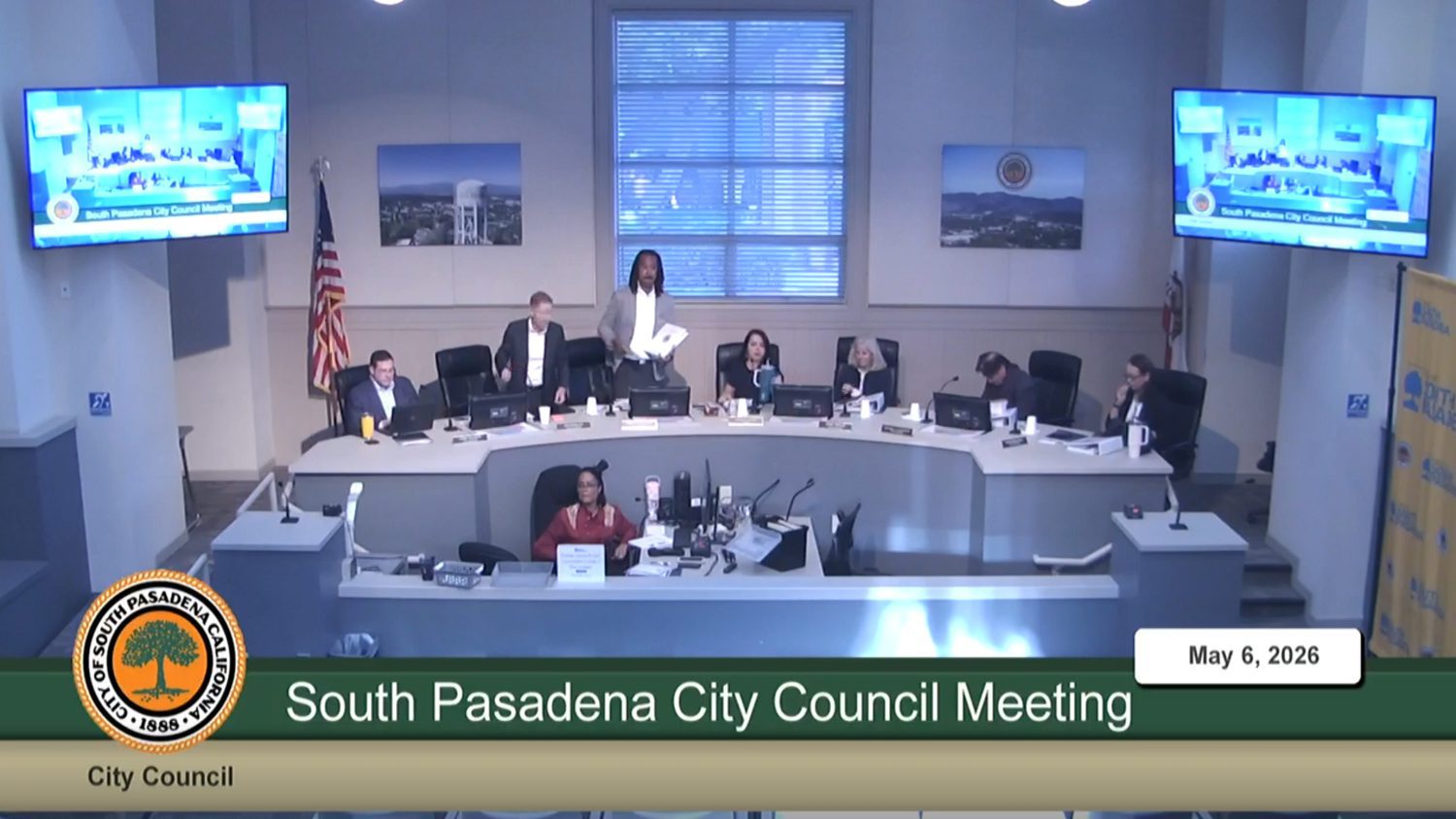
Mayor Sheila Rossi, Mayor Pro Tem Omari Ferguson, Councilmembers Michael Cacciotti, Jon Primuth, and Janet Braun — together with Planning Commission Chair Lisa Padilla, Vice Chair Amitabh Barthakur, and Commissioners Mark Gallatin, Jason Claypool, Arnold Swanborn, and James Martin — are the eleven elected and appointed officials who will, between now and the July 1, 2026 effective date, decide where in South Pasadena the new density goes. That is the practical reading of where the discretion sits. Staff, including City Attorney Roxanne Diaz and Community Development Director Erika Ramirez under City Manager Todd Hileman, has put the analysis on the table. The political work is all that remains.
Measure SP was sold to South Pasadena voters as the path that put the city on its own footing for state housing compliance. Sacramento, less than a year later, decided that footing was not sufficient. The reasonable question to ask, of every official involved at every level, is whether the trade made in November 2024 still means anything in November 2026.
The Mission Station has been the geographic and symbolic center of South Pasadena for more than a century. It will be again. The shape of what surrounds it for the next several decades is being decided right now.
The South Pasadenan will continue to cover SB 79 implementation as the city moves from study session to ordinance, from RFP to consultant selection, from local draft to HCD review. A follow-up piece on the inside-baseball discussions among officials, neighboring cities, and regional advocates will run separately.