

















South Pasadena’s electrical infrastructure, much of it mounted on decades-old wooden power poles, is in need of a clear long-term modernization plan. While burying the city’s power lines underground is not immediately feasible, local experts in municipal planning, infrastructure development, and major industrial projects are urging city leaders to start the process of envisioning how and when this transition can happen.
The push for ‘undergrounding‘ planning is not just about aesthetics—it’s about fire safety, public health, long-term cost efficiency, and infrastructure resilience. Cities across California have begun making similar moves, and South Pasadena has a timing opportunity to position itself strategically for funding and planning efforts.

The Benefits of Undergrounding: Public Safety, Long-Term Savings, and Aesthetics
- Fire Prevention: Overhead power lines are a known fire hazard, particularly in dry and windy conditions. South Pasadena has experienced semi-regular “pole fires”, where power poles catch fire in backyards and residential areas. Undergrounding would essentially eliminate this risk.
- Public Safety and Reliability: Storms, high winds, and vehicle collisions frequently damage above-ground power lines, leading to outages and safety hazards. Underground power lines are far more reliable in extreme weather.
- Lower Long-Term Costs: While undergrounding requires significant upfront investment, long-term maintenance costs are vastly reduced compared to ongoing repairs and emergency fixes for aging above-ground systems.
- Community Aesthetics and Property Value: Burying power lines eliminates unsightly poles and tangled overhead wiring, enhancing the livability of South Pasadena’s neighborhoods. Other tangible benefits include increased property values and reducing property insurance costs for homes and commercial buildings.
Poisonous Poles: Chemical Soaked Power Poles in South Pasadena Residential Areas
What hasn’t been widely discussed is the environmental and health risk posed by wooden power poles. Most of South Pasadena’s utility poles are treated with pentachlorophenol (penta), creosote, and arsenicals (like chromated copper arsenate, or CCA)—chemicals used to prevent decay and insect damage. All of these industrial chemicals are potentially cancer-causing, and contribute to a variety of longterm illnesses.
- Pentachlorophenol (Penta): A toxic wood preservative linked to nervous system and liver damage.
- Creosote: A known carcinogen, with exposure risks including skin burns, respiratory issues, and potential groundwater contamination.
- Chromated Copper Arsenate (CCA): Contains arsenic, which can leach into surrounding soil over time.
There are obviously thousands of these poles holding up our power lines throughout South Pasadena—many standing in residential backyards, along sidewalks, parkways and near schools. As these poles age and degrade, the chemicals leach into the environment, posing serious potential health risks.

preservative Pentachlorophenol is extremely toxic to humans from acute short term ingestion and
inhalation exposure Acute inhalation exposures in humans have resulted in neurological blood and liver
effects and eye irritation Chronic long term exposure to pentachlorophenol by inhalation in humans has
resulted in effects on the respiratory tract blood kidney liver immune system eyes nose and skin
Human studies are inconclusive regarding pentachlorophenol exposure and reproductive effects Human
studies suggest an association between exposure to pentachlorophenol and cancer Oral animal studies
have reported increases in liver tumors and two uncommon tumor types EPA has classified
pentachlorophenol as a Group B2 probable human carcinogen
Why Undergrounding is Out of Reach – For Now
The reality is that undergrounding South Pasadena’s power lines today would cost of tens of millions of dollars. Based on cost estimates from similar cities, burying power lines runs between $1-million and $4-million per mile. With South Pasadena’s possible 40 miles of streets with poles, that puts the total price tag as ‘not possible’ if funded out of the South Pasadena City finances directly.
For reference, other California cities have attempted similar projects:
- Pasadena has implemented undergrounding in phases, but the process has taken decades.
- San Diego estimated that undergrounding citywide would take over 50 years to complete.
- Many other cities in other states, like Beaverton, Oregon has buried power lines in nearly all commercial areas and residential neighborhoods. Any new development it’s a requirement. This procedure is performed within a long-standing partnership with PG&E, for example.
Simply put, South Pasadena doesn’t have the budget to do this all at once. But not having an immediate solution doesn’t mean ignoring the issue.
A Smart, Phased Approach: Putting Undergrounding on the Books
Several local experts and community members believe the city should at least begin the conversation about a long-term, phased approach to undergrounding. This would involve:
- Identifying high-risk areas where undergrounding should be prioritized (e.g., fire-prone zones, major traffic corridors, and school-adjacent areas).
- Seeking creative funding sources to begin early-stage planning and pilot projects.
- Working with utility providers like Southern California Edison (SCE) and Clean Power Alliance to explore partnerships.
- Engaging federal and state representatives, including Rep. Judy Chu, to identify grant and infrastructure funding opportunities.
- Incorporating undergrounding into future city planning, including initiatives like Measure SP.
Funding Options: A Creative Approach
While traditional funding for undergrounding comes from city budgets and ratepayer surcharges, South Pasadena leadership will need to think outside the box to secure funding. Possible sources include:
- State and Federal Infrastructure Grants: The Bipartisan Infrastructure Law has allocated funding for power grid modernization, including undergrounding projects.
- Public-Private Partnerships: The city could collaborate with developers, energy providers, and large property owners to share costs in targeted areas.
- Utility Underground Districts (UUDs): Pasadena has (maybe) successfully used this model, where designated districts fund undergrounding through localized assessments.
- Green Energy and Resilience Funding: Grants focused on wildfire prevention and climate adaptation could provide financial support.
- Measure SP and Local Bonds: If the community supports infrastructure upgrades, a local bond measure could partially fund undergrounding efforts.
South Pasadena Should Start Taking Steps Towards a Safer Electrical Grid
South Pasadena may not be capable to engage in burying all its power lines today, but a long-term strategy can start now. The health risks of toxic power poles, the growing dangers of pole fires, and the overall aging infrastructure make this a conversation the city can’t keep ignoring; the current South Pasadena City Council is in a unique timing position to get a meaningful plan on the books.
With smart planning, collaboration with state and federal agencies, and innovative funding strategies, South Pasadena can start taking steps toward a safer, more modern electrical grid that will serve the city’s long-term future, rather than reacting to emergencies as they arise.
This is a once-in-a-generation infrastructure opportunity. It’s time for South Pasadena’s leadership to act not just for today but for the next century of residents who will call this city home.




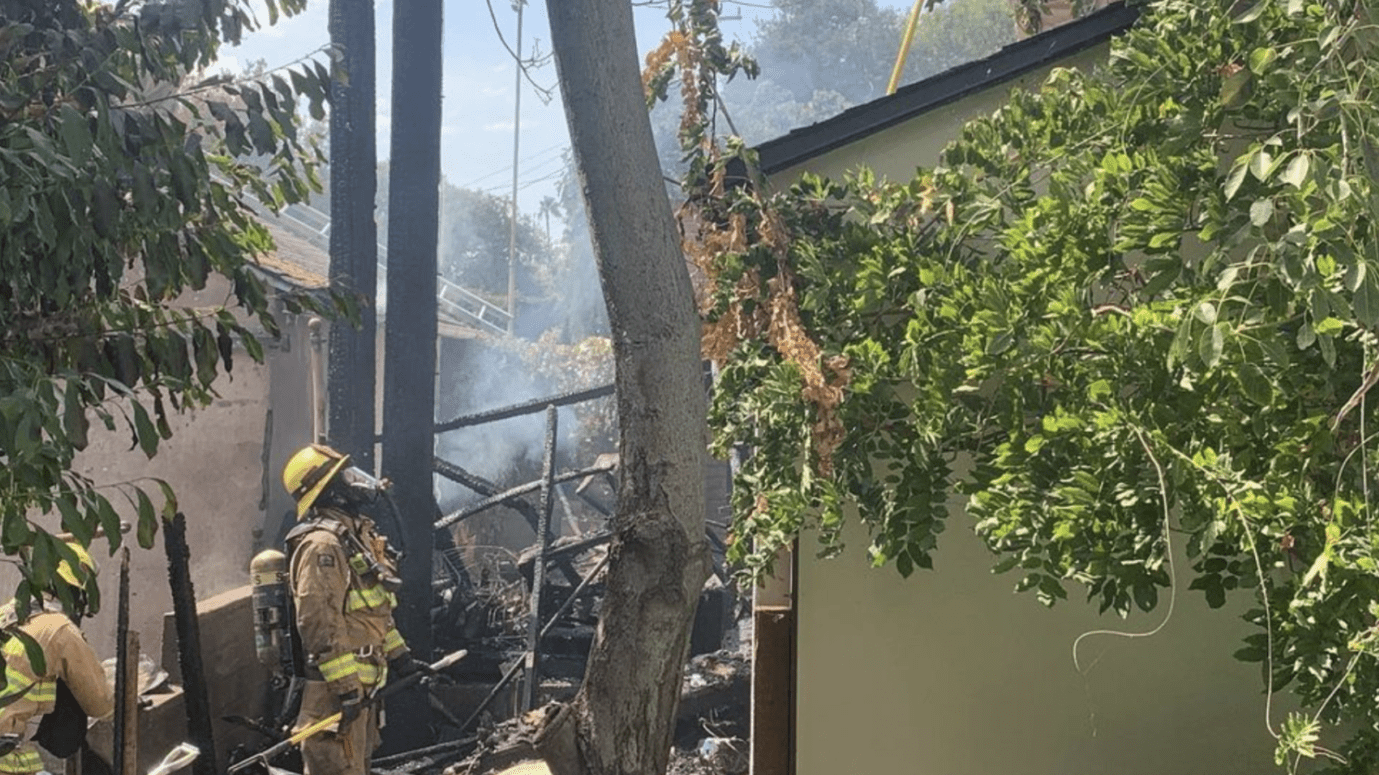
Today, 7-2-25, we experienced another SCE pole transmission-line fire. And, as expected, it was located at a transformer on a transmission line that travels through the back yards between Grand and Forest Ave., just 2 houses below the 110 freeway crossing – a short distance, and apparently on the SAME LINE from where I reported in Jan that we had these very transmission lines touching/arching the night of the Altadena/Eaton Canyon fire.
Yes, neighbors reported the arching to our police on 1-7-25. Reports were made to SCE. And our police department also said they would report it to SCE. To date, we’ve not seen any SCE trucks STOPPING to inspect these lines, though days after the Eaton fire, we saw a truck do a “drive-by” up and down the two streets looking up at the lines as he drove through the area – that was it, no real inspection. And now, today, we just had another SCE initiated fire on this very line that has damaged a private garage and fence.
I have just placed a call to our SP City Works department in hopes that perhaps SCE will take a report initiated by our city more seriously (after this current fire damage) than they appeared to have taken a citizen’s eyewitness report back in January.
Had the resident living behind the damaged property, not immediately noticed and reported this fire today – it could have spread very fast to adjoining buildings.
SP has been smart enough to maintain our own Fire and PD departments who do a fantastic job keeping us safe. What we lack is a responsive SCE power co. How many cities have to burn down and people die before power companies are forced to be proactive and clean up their safety issues? If anyone wants to do the math – start with this partial list – Laguna 1970, San Diego 2007, Sylmar 2008/2019, Paradise 2018, Malibu/Woolsey 2018, Lāhainā 2023, Texas Panhandle 2024, Altadena/Pasadena/Palisades 2025 plus Fillmore, Santa Clarita, Simi Valley, Kenneth, Malibu, Santa Monica, Manhattan Beach, and Long Beach have also experienced wildfires linked to power lines.
At some point you’d think insurance companies would help weigh in on whether it would be more cost efficient to underground the lines, right?
Thank you Steven Lawrence for your reporting!
Thank you Steven for such a well researched article!
During the Altadena Fire, we witnessed arcing occurring with power-lines located on Forest Ave, next street east of Arroyo Dr (abutting the Arroyo Riverbed) and north of Magnolia Street. The sparks were flying about 50 feet – into the window screen of an apartment window on the south side of Magnolia.
There should be a record of this with the South Pasadena police department because they were called and they came by to check it out. The responding officers told us they would report it to SCE and have SCE turn off the power to that line. Then the SPPD raced off saying there were other fires that had started in South Pasadena and they were needed there (we are fortunate and grateful to have a good local police force).
However, SCE never intentionally turned off the power in our area. I watched the SCE incident map. Eventually the power to our area went down about an hour later, as gusts reached 80-100 mph, but it wasn’t a controlled black out. Instead it was clear from the info posted on SCE’s own incident map, and days later after reading how the fire started on SCE lines in Eaton Canyon, why we can’t rely on SCE to protect South Pasadena any better than they did Altadena.
I would suggest the power lines in the area along the Arroyo Riverbed should be among the first to be placed underground. The Arroyo acts like a wind tunnel and the lines in the areas near it have proven to be among the most susceptible to arcing. If winds that race down from the hills through the riverbed bolster a fire, such a fire could take out a good portion of the city during the next Santa Ana event. The houses along the river bed and on the streets just above as mentioned, are now listed in the Fire Marshall’s new severe fire hazard zone.
Why don’t we start under-grounding in the portions of the city where we are most likely to get a fire started from power-lines that have a history of arcing in winds?