
















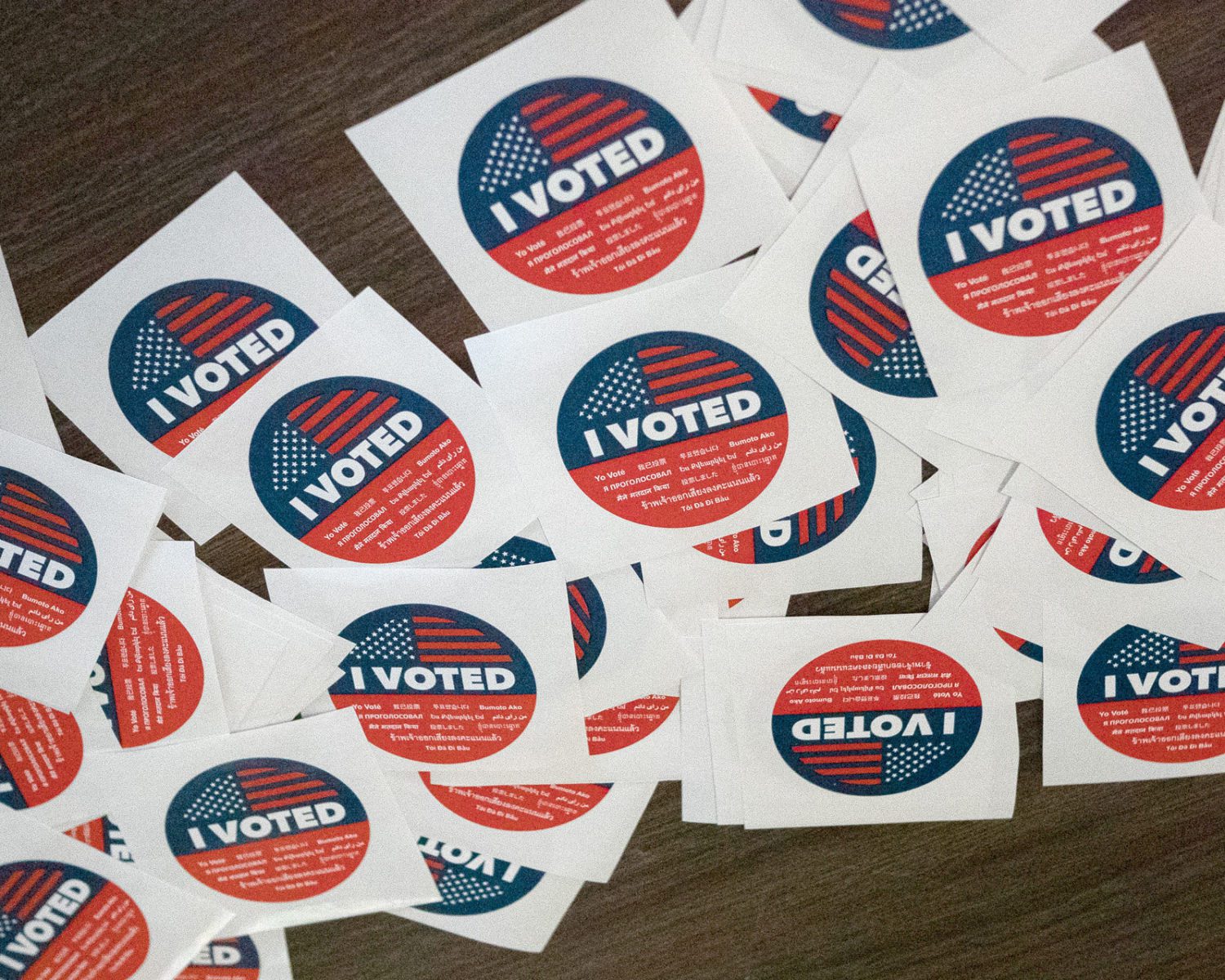

California voters have decisively approved Proposition 50, clearing the way for a rare mid-decade redraw of the state’s congressional map and handing Gov. Gavin Newsom a major political victory in a fight that has drawn national attention.
With roughly two-thirds of expected ballots counted as of about 10:20 p.m. Tuesday, unofficial statewide returns showed Prop. 50 leading by about 64% to 36%, a margin of roughly 4.6 million “yes” votes to 2.6 million “no” votes. Major news organizations projected the measure’s passage shortly after polls closed at 8 p.m., based on lopsided early returns and the wide spending advantage of the “yes” campaign.
What Prop. 50 does now that it’s passed
Prop. 50 amends the state constitution to set aside California’s existing congressional map, which was drawn by the independent Citizens Redistricting Commission after the 2020 Census, and replace it with a new set of lines drawn this summer by the Legislature and signed off on by Newsom.
Key features going forward:
-
New map takes effect starting with the 2026 midterm elections. The same lines will also be used in 2028 and 2030.
-
The independent commission is not abolished. Under the measure, the commission resumes its normal role after the 2030 Census, when it will again draw new districts for the 2032 elections and beyond.

-
The new map is openly engineered to improve Democrats’ odds in several currently Republican-held districts, in effect trying to offset GOP-drawn maps in states such as Texas. Analysts estimate it could put up to five Republican House seats in play, potentially reducing the number of Republicans in California’s 52-member delegation to just four.
The most heavily affected incumbents include Republican Reps. Ken Calvert, Kevin Kiley, Doug LaMalfa, Darrell Issa and David Valadao, whose districts would shed some reliably conservative territory and pick up more Democratic-leaning voters under the new lines.
Supporters framed the move as “fighting fire with fire” after President Donald Trump pushed Texas and other GOP-run states to adopt new maps designed to add Republican seats ahead of the 2026 midterms. Opponents argued that Democrats had just done in blue California what they condemned in red states — only this time by overriding the independent map voters approved in 2008.
How voters split: coastal landslide vs. inland resistance
The Prop. 50 map not only rewrites congressional boundaries — Tuesday’s results exposed a sharp geographic and partisan divide inside California itself.
Early returns showed:
-
Overwhelming support in the Bay Area. All nine Bay Area counties backed the measure by wide margins. In San Francisco and Marin, more than 80% of voters cast ballots for “yes,” with Alameda County just behind.
-
Comfortable wins in Los Angeles and most coastal metros, including large margins in heavily Democratic urban and inner-suburban districts.
-
Stiff opposition in the rural northeast and parts of the Central Valley. Counties such as Lassen and Modoc reported roughly three-quarters of voters opposed, and “no” was leading in several Central Valley counties including Kern and Kings, though often by narrower margins.
The pattern tracks California’s broader partisan geography: deep-blue metropolitan coasts versus more conservative inland regions that already feel overshadowed in Sacramento and in Washington.
Turnout and the speed of the call
Prop. 50 was the only statewide item on the special-election ballot, but interest was relatively high for an off-year contest built around a technical issue like redistricting.
State figures indicated that about 7.2 million ballots had been returned before Election Day, thanks to California’s universal vote-by-mail system and weeks of early voting. By Tuesday afternoon, political data firms were estimating turnout approaching one-third of registered voters even before in-person votes were fully counted, with millions more ballots arriving at vote centers or drop boxes by the 8 p.m. deadline.
That heavy front-loaded vote — combined with the huge financial imbalance between the two sides — is what allowed election callers to declare the race for Prop. 50 almost as soon as polls closed. Campaign filings show:
-
The “Yes” side, backed by Newsom, labor unions and national Democratic groups, raised well over $150 million, enough that the California Governor Gavin Newsom publicly told donors late in the race to stop giving money.
-
The statewide special election itself cost in excess of $200 million to administer, according to state finance estimates and the Secretary of State’s office — a price tag opponents repeatedly highlighted.
-
The “No” side was dramatically outspent, and reportedly out-campaigned, even after attracting large checks from Republican-aligned donors and super PACs trying to defend endangered House seats.
By early evening, the pattern in the mail-in vote — overwhelmingly favorable to Prop. 50 in Democratic strongholds, with only limited resistance elsewhere — left little doubt about the outcome, even before most in-person precincts had finished reporting.
Republican Voter Turnout, ‘No on 50’, Was Low
While Democrats and allied groups mounted a coordinated mail and digital effort to bank early votes, Republican turnout lagged across the board.
Preliminary data show that Republican-leaning counties in the Central Valley and Inland Empire posted below-average mail-in returns, while Democratic strongholds in Los Angeles, the Bay Area, and coastal counties turned out heavily. GOP-heavy precincts saw fewer in-person ballots than expected, and rural counties reported lower total participation than in prior statewide elections.
Analysts say this turnout gap likely sealed the result before Election Day even began. By Monday evening, more than 7.2 million ballots had already been received and verified statewide — nearly a third of all registered voters — and early vote data overwhelmingly favored the “Yes” side. By the time in-person votes began coming in, the math was already locked.
Reactions from Newsom, Trump and critics
Newsom, appearing before supporters in Los Angeles a little before 9 p.m., cast the result as a direct rebuke to Trump and to Republican-led redistricting elsewhere.
He argued that California was “standing firm” against what he describes as a national strategy to lock in GOP control of the House through aggressive map-drawing, and urged other Democratic-leaning states to consider similar moves.
Republicans, in California and nationally, blasted the result as a partisan power grab and vowed to keep fighting in court and in future elections. In social-media posts earlier in the day, Trump labeled the measure “unconstitutional” and claimed, without presenting evidence, that California’s mail-in ballot system and the Prop. 50 vote were under “very serious legal and criminal review.”
The legal landscape is complicated and likely to remain fluid:
-
A pre-election lawsuit filed in Texas by Reps. Darrell Issa of California and Ronny Jackson of Texas, seeking to block implementation of the new maps even if voters approved Prop. 50, was dismissed last week for lack of standing. A federal judge ruled that complaints about lost partisan advantage did not constitute the kind of concrete legal injury needed to sue.
-
Separate challenges to redistricting practices — including how states use race in drawing maps — are already before the U.S. Supreme Court, and legal scholars say those rulings could affect how secure California’s new lines are in the long run.
Opponents in California, from former Gov. Arnold Schwarzenegger to good-government groups that championed the original citizens’ commission, warn that Tuesday’s vote will be cited by both parties nationwide as precedent for dismantling independent map-drawing whenever it becomes politically convenient.
Now What?
Practically, the passage of Prop. 50 sets in motion a compressed but consequential calendar:
-
The new congressional lines will now be certified and integrated into candidate filing and election administration for 2026. County registrars will begin overhauling precinct maps and voter information in the coming months.
-
Campaigns on both sides will immediately begin testing the new districts, with Democrats targeting the half-dozen Republican seats that become more competitive and Republicans looking for ways to adapt or recruit different kinds of candidates.
-
Any new legal challenges — including potential suits brought inside California — will likely focus on whether the mid-decade change violates state constitutional guarantees or federal protections for minority voting rights, though past Supreme Court rulings have made federal courts reluctant to intervene in purely partisan gerrymandering disputes.
For now, though, the central fact is clear: California voters have signed off on a dramatically different congressional map, temporarily sidelining the independent redistricting commission they created and making this deep-blue state a key player in the national struggle over who controls the U.S. House in 2026 and beyond.