














South Pasadena experienced at least $2.89 million in damages during last week’s windstorm and fire, a “very rough” estimate that is likely to rise, Police Chief Brian Solinsky told the city Council Wednesday. About half is for repairs to buildings and equipment, plus $820,000 for debris removal costs and another quarter million dollars for replacement of trees, street lights and repairs of parks, trails and other infrastructure.
The estimate was turned in to the LA County Emergency Operations Center and, along with a formal declaration of a local emergency approved by Council Wednesday, marked the first steps in a process of damage assessments, applications and audits aimed at recovering eligible costs through state and federal programs. Solinsky said it will likely take several years for the fund recovery process to play out.
According to the declaration, during the events commencing Jan. 7, South Pasadena “experienced power outages; downed and damaged trees; damaged equipment, street and sidewalk debris;…non-working traffic lights, lack of rail line barriers at railroad crossings; residential and business power loss;…impacts to employees (who serve as disaster service workers) because their homes were burned down and/or damaged because of the fire events; damage to public infrastructure and private property throughout the City.”

Solinsky and Fire Chief Gregory Lloyd offered a recap of events, from the extensive preparation commenced once it became clear that conditions were deteriorating, activation of the city’s 24-hour Emergency Operations Center which both praised as substantially streamlining the assessment of needs and management of resources, and recounting the efforts of city personnel who took on the response.
SPPD alone received over 1400 calls for service related to wind activity during the three days Jan 7-9.
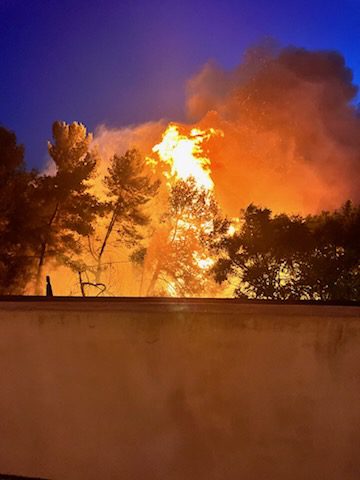
While the crisis began as a wind storm, Solinsky said it was soon overshadowed by the Teresa Fire, which broke out in a clump of trees on a slope in the city’s Monterey Hills neighborhood, potentially threatening the many houses in that neighborhood, but which was quickly brought under control by three dozen fire fighters from South Pasadena, Alhambra, LA and Pasadena.
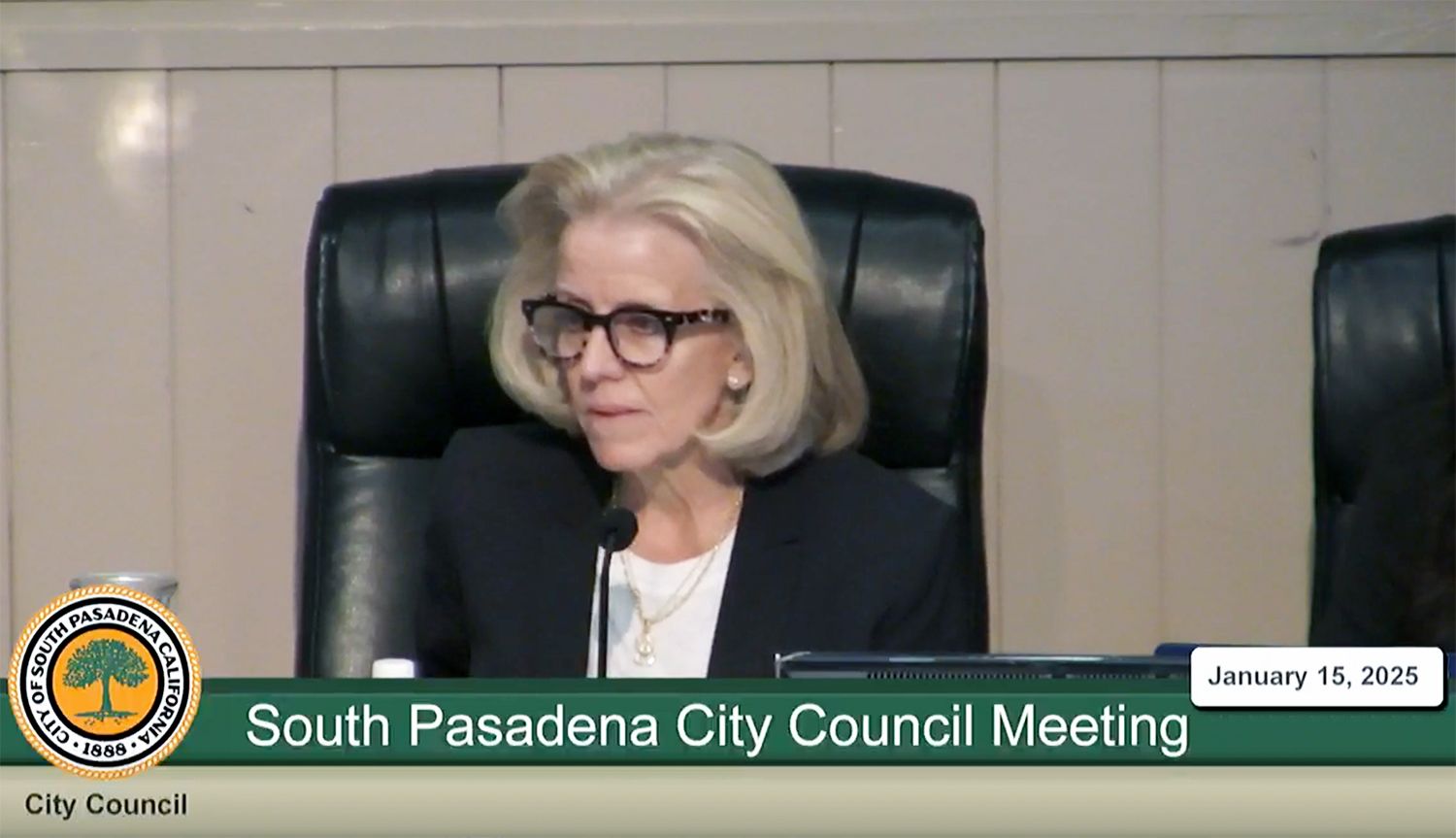
“That fire could have been very bad,” Mayor Janet Braun said in thanking the city’s first responders.
Angelo Gladding, a homeowner in the Monterey Hills, spoke publicly to thank the fire department “for saving the Hills. The wind was so strong,” he said, “I feel like we were ‘this close’ to something far worse.”
Fire Chief Lloyd received a spontaneous round of applause when he was introduced, but was quick to say he “could not take that applause” because “without a doubt the events last week, the successes we had, would not have been accomplished without the effort of an amazing team” that included the fire fighters, public works [and] law enforcement partners. “Everyone in the city came together, as well as the community in amazing ways.” .
Lloyd also introduced two newly-hired firefighter/paramedics, Andrew Rangel and Jacob Lass.
Later in the meeting, the Council approved a $1.24 million contract to purchase a new six-cylinder diesel fire engine from South Coast Fire Equipment for delivery in 2028, and an
appropriation for a $304,000 for an ambulance with $22,000 in updated radio equipment for delivery next month.
The need to sign the contract four years ahead of delivery of the fire engine is due to the increase in lead times for such items brought on to the supply chain gaps exacerbated by the pandemic. Councilmember Sheila Rossi spoke of the need to ensure set asides in budget documents for contracted expenses to avoid the reallocation of such funds due to failure to track such costs over multiple budget periods, possibly through the creation of a vehicle replacement fund or setting aside a general fund reserve. Interim City Manager Penman agreed to agendize such a discussion in February.
In 2023, SPFD units responded to 2,585 calls according to a staff report; 81 percent for medical issues, 13 percent for fire and 6 percent unspecified “service calls.”
The department has two fire engines, a “front line” unit that is 10 years old and a reserve engine that is 20 years old; both are at the end of their recommended life cycle for their designated purposes. The new Pierce Enforcer PUC Fire Engine will replace the frontline unit, which in turn will be predesignated the reserve unit.
Councilman Mike Cacciotti asked Lloyd why the department was purchasing a diesel rather than electric engine, since the city has famously moved to an all-electric fleet for its police department. Lloyd explained there are as yet no fully electric fire engines, only hybrids with diesel engines that cost more. At present, “the technology is not there to gain the benefit” of the cleaner energy alternative.