









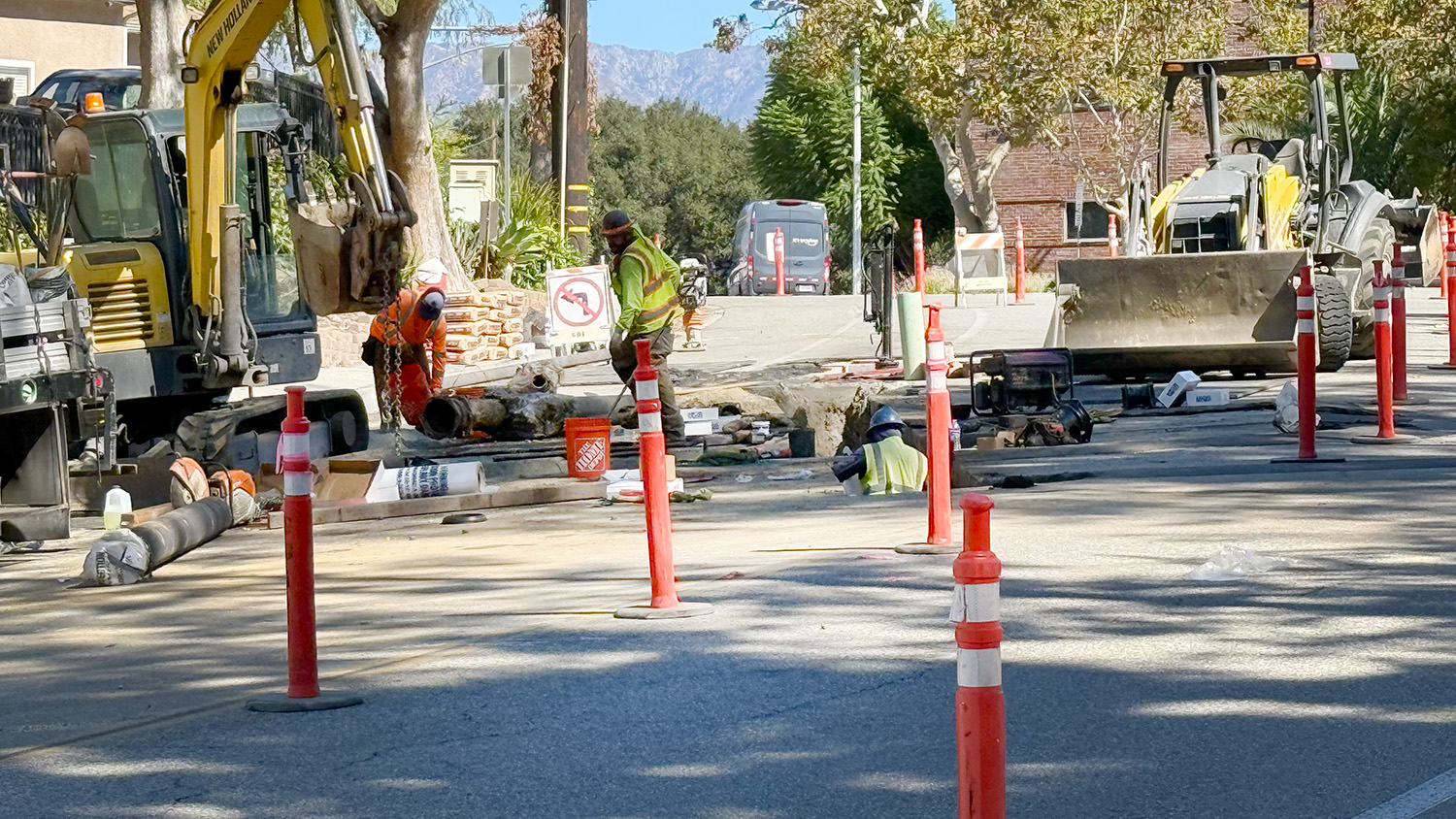

With mail-ballots already landed in mailboxes and Election Day less than two weeks away, South Pasadena voters are being asked to make one of the biggest financial decisions this city has put before them in a generation.
And to be fair: You’ll notice there isn’t a “no” opposition statement in the ballot. One was not submitted for the ballot publication by anyone or any group for reasons unknown. There are many in town with much concern about how the bond measure is written. This report will go through some of the concerns.
Putting together the streets repair bond measure for the ballot is no simple task and residents have commended our city staff and City Council for getting this on the ballot – no matter what side of the decision anyone is on.
The Breakdown (No Pun Intended)
Measure SOS, the “Save Our Streets” bond, would borrow up to $80 million to repair neighborhood streets, sidewalks, curbs, gutters and storm drains over the next 10 years, paid for by a property tax that would stay on South Pasadena tax bills for roughly 35 years. Here is what the measure does, what it costs, who pays, and what voters still need to know before they mark their ballots.
The Problem Nobody Disputes
South Pasadena maintains 69 miles of streets, most of them built 70 to 100 years ago. More than 100,000 cars a day pass through a town of about 27,000 people. South Pasadena’s own engineers score the city’s streets at about 54 out of 100, and project that score to slide into the mid-40s if nothing changes.

City Hall receives about $2.5 million a year in money set aside for streets repairs and maintenance, against an estimated $7 to $8 million a year in need. State gas tax money is handed out by population, not by how many cars use our roads, so a small city carrying regional traffic is left very short financially.
For decades, South Pasadena spent its political energy, and chunks of budgets, on critical fights like stopping the 710 freeway from destroying the town. Voters here have passed bonds for water and for schools, but never one for pavement.
Since 2016, damaged streets and sidewalks have cost the city more than $7 million in damage and injury claims. Whether the streets need work is not really in question. The question is how to pay for it, and whether this plan is a good deal for the tax payers.
What Voters Are Being Asked To Approve
• Up to $80 million in borrowing, repaid through a tax on property based on assessed value. The cap is firm: any additional borrowing would require a brand-new measure and another two-thirds vote.
• City Hall plans to borrow in three rounds a few years apart, roughly $50 million, then $20 million, then $10 million, as the work moves forward. Each round is repaid over about 30 years.
• Because the rounds are staggered, the tax would be collected for about 35 years, into the early 2060s. The street work itself is planned over about 10 years.
• About $155 to $157 million in total repayment once interest is included, according to the city’s estimates. South Pasadena’s Chief Financial Officer compares the ratio of principal to interest to a 30-year home mortgage.
• An average of about $33 per $100,000 of assessed value per year. The rate is projected to peak at about $55 around 2034, when all three rounds are being repaid at once, then fall each year after, dropping under $10 in the final years. These are estimates, not caps.
• This tax would sit on top of the school bond South Pasadena voters approved in June, which runs about $48 per $100,000. Together, the two bonds average roughly $81 per $100,000.
• The bond targets neighborhood residential streets, not the main through-streets. City Hall says it will keep pursuing outside grants for the major roads, which are more likely to qualify for regional and state money.
• No pipes. Water and sewer lines under the streets are paid for from South Pasadena’s separate water and sewer funds, not from bond money, a point Councilmember Janet Braun has made publicly from the dais and in community meetings.
• Bond money is legally restricted to streets, sidewalks, curbs, gutters and storm drains, kept in a separate account, with an annual public report to the City Council and annual financial disclosures filed publicly for bondholders.
• A street-by-street 10-year map is posted on the city’s website, but it is a plan, not a promise, and can change.
• Measure SOS needs a two-thirds vote to pass – that’s a 67% ‘yes’ from the voting population of South Pasadena.
Who Pays What & When
Because the tax is based on a property’s assessed value, not its market value, what each owner pays depends heavily on when they bought. City Hall estimates the total cost over the life of the bonds at about $1,540 for every $100,000 of assessed value.
• A longtime South Pasadena homeowner whose home is assessed at $400,000 would pay about $130 a year on average, and roughly $6,200 over the life of the bonds.
• A family that bought three years ago at $1.5 million would pay about $495 a year on average, about $825 in the peak year, and roughly $23,000 over the life of the bonds.
• Apartment building owners pay on the full assessed value of the building. Whether that shows up in tenants’ rent depends on each landlord and on state rent-increase limits.
• Many commercial leases pass property taxes through to the tenant, so small businesses on Mission Street and Fair Oaks Avenue may feel this through their rent rather than a tax bill.
• Renters will not see Measure SOS on a tax bill, but should not assume it will never reach them.
• The homeowner’s exemption lowers the bill slightly for owner-occupied homes.
A Real-World Example: Today’s South Pasadena Toddler
Picture a two-year-old growing up in South Pasadena today. If Measure SOS passes, the street work is planned over roughly the next 10 years, wrapping up about the time the child is a teenager.
The tax itself runs into the early 2060s. If that child grows up and buys a home in South Pasadena at 30, around 2054, they would pay this tax for about eight years, into their late 30s, at the tail end of the bond when the rate is projected to be at its lowest.
City Hall’s view is that this is fair by design: A street, like a school building, serves people for 30 years or more, so the cost should be spread across the people who use it, rather than loaded onto today’s owners, many of whom will move away while the street keeps serving the next generation. That argument holds best for full rebuilds, which can last 30 years or more if maintained. Lighter resurfacing typically lasts 5 to 20 years, and South Pasadena has not yet published how the work splits between light resurfacing and full rebuilds.
That means some repaired streets will likely need attention again before the last payment is made, and that upkeep comes out of the city’s regular budget, not the bond. None of this changes the fact that the streets need fixing. It means voters should go in with clear expectations about what lasts and what does not.
Who Would Be Running The Street Repair Operations
A bond is only as good as the people spending it, and South Pasadena’s City Hall looks very different today than it did just two years ago.
After years of turnover in the city manager’s office and a finance department buried under a backlog of overdue accounting, the City Council hired City Manager Todd Hileman in 2025, bringing three decades of experience running cities across six states.
Much of the groundwork came before he arrived. Councilmember Janet Braun, who was mayor when Hileman was hired, pushed hard to clean up the city’s finances along with Sheila Rossi during the most difficult stretch, often taking a lot heat for it, and helped line up the early work that led to this bond.
She and now Mayor Sheila Rossi have worked closely together since. Nick Kimball, who previously served as city manager and finance director in San Fernando, joined that summer as Assistant City Manager and Chief Financial Officer and is the chief architect of the bond’s financing plan. Under their leadership, the finance department has been fully staffed, most of the old backlog has been cleared, and Mayor Sheila Rossi has said publicly she can now trust the numbers coming out of City Hall in a way she could not before.
The current team inherited South Pasadena’s street problem; they did not create it, and they bring fresh eyes and a hands-on, results-first approach to fixing it. The City Council voted unanimously to place Measure SOS on the ballot, combining newer voices with longtime institutional knowledge on the dais.
Mayor Pro Tem Omari Ferguson has pushed for hard data before the city spends money, the kind of scrutiny a 10-year bond program will need. The caution is simple: the work runs 10 years and the payments run 35, far longer than any one council or city manager typically serves.
Voters are betting not only on today’s team, but on City Hall keeping that discipline long after the current leadership moves on.
The Honest Trade-Off
The case for yes is real. Streets get more expensive the longer they wait: routine upkeep runs about $50,000 a mile, while a full rebuild can reach $2.5 million a mile.
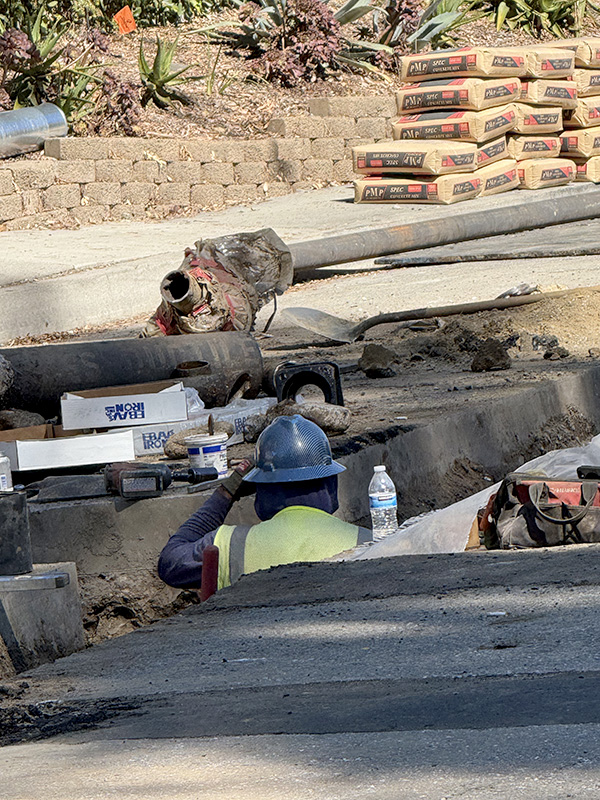
The first project, the Indiana Avenue area in the southwest hills, is a full rebuild of curbs, gutters, sidewalks and storm drains, with water and sewer lines replaced at the same time from the city’s utility funds. Its design is nearly complete. It goes before the Public Works and Infrastructure Commission and City Council in early 2027, with construction expected to take up to nine months once it starts.
If Measure SOS fails, South Pasadena has no construction money identified for Indiana, and it could be delayed for years while the city saves its $2.5 million a year, a few years at a time, for one large project at a time. Supporters say finding the money elsewhere would mean cutting roughly 10 percent of the city’s general budget.
The case for caution is also real. There is no binding list of which streets get fixed. There is no cap on the yearly tax rate. The $80 million does not close the city’s own estimated $136 million need, and the main through-streets are left to grants that may or may not come.
The ballot language promises audits, but there is no independent citizens’ oversight committee of the kind South Pasadena voters are used to with school bonds. And residents have questioned the city’s past track record on finishing capital projects on time.
South Pasadena’s official election page lists only an argument in favor of Measure SOS; no formal argument against appears there, so many voters have not seen the opposing case laid out in their official materials.
The Bigger Picture: A Town About To Be Under Construction
Measure SOS does not land on a quiet town. It lands on top of the largest wave of construction South Pasadena has seen in generations, and most of it is aimed at the same few square miles.
On Fair Oaks Avenue, The Raymond, a seven-story, 287-unit senior living community on the old Shakers and 625 Fair Oaks site, is the largest private development the city has seen in nearly a century and is expected to break ground soon.
On Mission Street at Fairview Avenue, the long-delayed Mission Bell project calls for 36 homes, shops, and two levels of underground parking dug beneath the site.
At Mission Street and Fremont Avenue, the former Carrows corner is fully approved for a four-story building with 56 condominiums and is now on the market to builders, and a 53-unit condominium project on Monterey Road won approval this summer.
Starting in 2027, the $42 million Huntington Drive and Fremont Avenue corridor project, the Westside Reservoir project, and school construction funded by the school bond voters approved in June will all be underway.
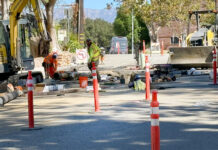
Layer the street bond’s 10 years of neighborhood rebuilds on top of that, and South Pasadena residents should expect torn-up streets, detours, lane closures, parking restrictions, and heavy trucks on residential blocks across town for much of the next decade. City Hall says it has sequenced the street work to avoid repaving streets that other projects will dig up, and that is exactly the kind of coordination voters should hold it to.
Whether you vote yes or no, go in clear-eyed about what is coming. Look up your property’s assessed value and run the numbers above, find your street on the city’s 10-year map, and know that the vote on Measure SOS is about more than potholes. It is a vote on how South Pasadena will live, drive, and get around for the next 10 years, and pay for it for the next 35.