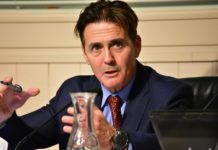






Here is something nobody tells you when you move to South Pasadena. The guy you keep seeing at the park at 7 a.m. with two dogs, the one who talks a little too fast and seems to sit on every board in Southern California, is a big reason we love our town so much. He has been on the City Council for 25 years. And this November he is on the ballot again, in the only contested council race in the city.
I sat down with Council Member Michael Cacciotti for what was supposed to be a quick catch-up. It ran well over an hour, and I barely used my question list. He answered most of it before I could ask. I do not always agree with every decision Councilmember Cacciotti makes. I have told him so. And it’s okay. But I left the conversation understanding something I should have understood years ago: a lot of what we take for granted here did not just happen. Somebody went and got it done. A lot times, it was him.
So let’s do this properly. If you don’t already know him, here is an idea of the kind of man he is, a few highlights of the work Cacciotti actually accomplished for South Pasadena, and why he says there are projects in the works that need to be completed.
Why He Ran For Council In The First Place – Way Back In 2001

Cacciotti did not move to South Pasadena to run for office. He moved here in the 1990s as a lawyer for Caltrans, rented a little apartment on Pasadena Avenue, and started hiking down into the Arroyo Seco. That was the whole plan.
Then in 1998 he was coaching youth soccer and could not find a real field. He went looking and made-due with the flat ground behind the golf course driving range. Back then that spot int he Arroyo was literally treated like a dump – even the horse stables unloaded manure there. People didn’t really go down there. With an idea and vision, he asked the city if it could be a park. The city called the next day and said no, we are selling it, the deal closes in a few weeks.
Back then, he was new on the Parks Commission; and along the way was appropriately introduced to Ellen Daigle. The two of them started a petition drive, marched on City Hall, and after about a year the land sale fell apart. People told him, you saved it, now run for council and help keep this town small. He did and he won in 2001.
Then a sitting councilmember said to him, fine, you saved it, but it is still a dump. What now?
So he wrote a letter to then-State Sen. Adam Schiff asking for two things: money to clean up the site, and a voting seat for South Pasadena on the Santa Monica Mountains Conservancy, the state agency that funds parks and open space across the region. Schiff delivered both. The $250,000 grant became the nature park, which opened in 2004. The conservancy seat he still holds today.
A big part of the reason why we have soccer fields and baseball fields the way we do is because of Michael’s involvement.
That is a pattern you will see over and over in this story. Identify the problem or opportunity. Find the agency that has money for it. Get on the board. Make it happen. The list of accomplishments is long.
The bike trail along the Arroyo is the same kind of story, just took a lot longer to get through the bureaucracy. While the park in the Arroyo was going in, Cacciotti was curious about the grass along the driving range fence and when checking it out – he found an old road underneath.
He wanted the driving range moved 25 feet so the road could become a bike and walking path. The conservancy gave him (the City of South Pasadena) $150,000 to design and engineer it. Then came ten years of meetings and negotiating. When construction money stalled, he got then-Assemblymember Chris Holden to lean on the conservancy board, and a $424,000 grant appeared at the next meeting. The regional air pollution agency kicked in another $124,000 from a program that funds bike lanes to get people out of cars. The Arroyo Seco Bicycle Pedestrian Trail opened in 2018, more than 10 years after the first petition. Hundreds of people a week, bike, hike, and jog along the trail that now is connected properly and safely.
His Other Job: Chairing South Coast AQMD

Cacciotti has sat on the board of the South Coast Air Quality Management District for 18 years, and in February he was sworn in as its chair.
The air district is the agency that regulates air pollution across Los Angeles, Orange, Riverside and San Bernardino counties. That is 17 million people, a budget of about $2 billion, and roughly $300 million a year handed out in grants and incentives to get polluting vehicles and equipment off the road. Until this year, he chaired the committee that watches that budget.
Most people in town could not tell you why any of that matters to South Pasadena. He can, and he explained why it’s important.
Start with the electric police cars. He says the whole thing began with an email he sent to then-interim City Manager Sean Joyce in May 2021: let’s stack three programs at once. Southern California Edison’s Charge Ready program, which pays to install vehicle chargers, would build the charging stations. The air district would fund the cars. The Clean Power Alliance, the region’s public electricity provider, would put solar on top. All three came through.
The AQMD and the Mobile Source Air Pollution Reduction Committee put up $500,000 in 2022-23 to make South Pasadena the first city in the region to pilot an all-electric police fleet. Edison built the charging infrastructure at no cost to the city, which he values at another $500,000. And the Clean Power Alliance has agreed to build a solar canopy with battery storage over the city lot, also at no cost, which is in design right now.
There Is More In The Pipeline As We Speak
A grant of about $250,000 for 2 electric public works trucks was approved by the full AQMD Board on October 2, 2026. The district pays half the truck and half the charging. The city has also applied for something called an EV ARC, a solar canopy with its own batteries that arrives on a trailer, takes up one parking space, and charges a vehicle off the grid with no digging or construction.
Then There’s The Work & Results That Never Show Up In A Budget or Headline
He has placed somewhere around 35 to 40 South Pasadena high school and college students in paid summer internships at the SCAQMD over the years. He has steered more than $300,000 in district money to a Cal State LA engineering program that flies students to Detroit to turn gas cars into electric ones. A few years ago they built a police version. Last week he was back down there with city public safety leadership looking at converting a Jeep Cherokee into an electric command vehicle for first responders. His line to the professor: last time you kept the car, this time we want it.
The Tesla Police Car Fleet Question, Answered Honestly
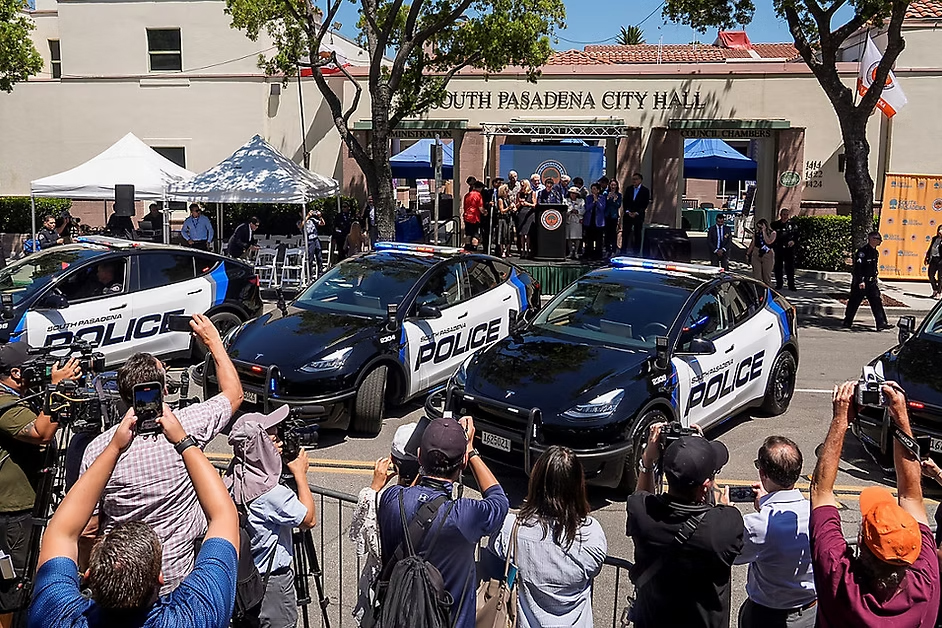
Everybody has an opinion on the Tesla police cars. They are sneaky quiet, which is great when you want an officer to roll up on somebody unnoticed, and they light up like a spaceship at night, which has its own charm. So I asked him the question people actually ask on the street: where is the maintenance bill, and did they live up to the hype?
His answer was more careful than the original sales pitch. Most South Pasadena Residents don’t consider that the state is going to require every city in California to switch to electric vehicles within about a decade anyway. He wanted South Pasadena to get there on somebody else’s money, and he says the choice of car was the police department’s, not his. At the time, a Ford Explorer took two years to arrive. Tesla could deliver now. About a dozen other police departments running them said they were fine as long as the charging was adequate. And the city leased the cars instead of buying them, on purpose, so it could switch when the technology moves.
Two years or so later, here is the scorecard: The detectives and the administrative staff love their Model 3 sedans. Patrol officers are mixed, which he says is true of every police car ever made. The back seat can be real problem for transporting large detainees. Tires wear faster, as expected. Brakes and fuel are where the quick and clear savings are. It turns out that Police Officers spend half to two-thirds of a shift sitting and watching, and a gas car burns fuel the whole time it idles. By his recollection of the department’s tracking, the energy line fell from around $120,000 a year to around $45,000 before this year’s price jumps.
Then he said the thing I did not expect. He rode patrol a few weeks ago in both a Tesla and a Chevy Blazer electric SUV and said the Blazer felt just as fast. Palo Alto’s police department is putting Rivian electric SUV’s into patrol and has invited our South Pasadena Police department to look at it. The department has a team evaluating all of it and reports to the air district in late November. If this is not the right car, he says, we will find another one and I will go get the money for it. The South Pasadenan will follow up on the real numbers at year end.
The ‘Mental Health Crisis Response’ Van South Pasadena Never Had To Pay For
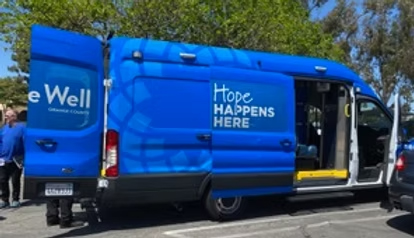 This one most people have never heard, and it may be the best example of what a regional seat is worth.
Cacciotti has rotated on and off the San Gabriel Valley Council of Governments since about 2003. That is the body where the valley’s cities get together to share costs and go after regional money. The problem was that its committee on homelessness met at 8 in the morning, and he was still a working deputy attorney general for the state. So in 2021 he retired early from the Attorney General’s office, pension in hand, specifically so he could be in the room. He says that outright.
The timing was perfect, because Measure H money, the county’s homelessness sales tax, was flowing. He drove to Huntington Beach with Police Lt. Robledo, Bill Kelly and Charles Treviño to ride along with the first mobile crisis response van in the state, came home, and pushed for South Pasadena, San Marino and Arcadia to be the first in the San Gabriel Valley. The van pairs a mental health clinician with police on calls involving someone in crisis. It launched in early 2022. The police chief had already budgeted $200,000 to $250,000 for it. The city paid nothing. The county and the Council of Governments covered it for three years, which Cacciotti puts at $600,000 to $700,000 saved.
He went on ride-alongs himself. He says about half the calls were not street homelessness at all. They were inside homes, parents and kids in crisis during the pandemic. One of the first calls he went on was a middle schooler who had attacked his mother. The clinicians went in with the officers. That is the kind of call the van exists for.
When the grant money started running down, then-State Sen. Anthony Portantino called him and asked where to send more. Cacciotti told him to send it to the Council of Governments so the whole valley could use it. Portantino came through with $825,000. Rep. Judy Chu added more. The van is still running today.

The same relationships feed the Holy Family Church food bank, where he volunteers every Monday morning. When he started in 2021 it served about 220 families. Today it serves 330, and he estimates one-in-five of them is from South Pasadena. He helped write a $50,000 Council of Governments grant that bought equipment and put cash in families’ hands at Christmas. This year, Cacciotti alerted Pastor Fr. Ricky and Marlene to an $80,000 grant through the SGVCOG, and although on vacation, Marlene was able to apply in time and resulted in an $80,000 grant for a new Medium Duty delivery truck.
It’s the hidden work, the important work that people feel every week on the street – very difficult to quantify and critically important to public service by definition. Many South Pasadena residences do not have any idea how much extra work goes into being on council. Every council member has their niche work and their special projects that they work on that benefit the city and the neighborhoods. 25 years of public service has yielded, countless results in ways that you will only feel when it’s gone. It’s worth noting again: you may not agree with Michael on everything, but his tenacity and service is unmatched in the last 30 years – and going strong.
The City’s Finances, Then And Now
Cacciotti brought paper to the interview. In 2001, when he took his seat, the city had $2.2 million in reserves and two lawsuits over the 710 freeway extension. The water fund, the account that is supposed to pay for pipes and reservoirs, was at zero. A 2007 staff report traced about $5 million pulled out of that water fund up to about 2001 to pay for the freeway fight. One reservoir had been out of service for 14 years because a eucalyptus tree fell on it and nobody fixed it. Three others dated to the 1920s. That was the city he inherited.
Today the city has about $14 million in undesignated reserves, plus roughly $3 million built up from the golf course that is being set aside for vehicles, facilities, and a cushion against any future audit surprises.
I asked about the last few years, when the city’s finance department came apart at the seams. He drew a line that I think many would agree with – at least in a general way. One department was in disarray, he said. The money was always there, it’s the accounting that went completely off the rails. There’s a lot of details to discuss about the finance much of it happened on his watch to be sure, but the fix also happened on his watch. He was extremely supportive of the eventual staff that come in to correct the situation as well as the finance commission and now current mayor Sheila Rossi and then may Janet Braun for their detailed work, getting the finance department cleaned up and on track. Michael mentioned that his focus on bringing in grant money to help Alleviate budget stresses to move the city forward in various directions was his focus well maintaining a consultancy with the rest of the City Hall council due to his institutional knowledge about how City Hall was operating was important pieces of the puzzle as well.
The South Pasadena Water System and The Streets.

Water was his first priority when he got on council, and you can see it in the ground. South Pasadena has five reservoirs. The Grand Avenue reservoir north of Trader Joe’s, the one the tree fell on, was rebuilt in 2006 or 2007 for about $7 million. A $47 million water bond in 2009 paid for the rest. The Wilson Reservoir, which sits in a San Gabriel neighborhood, got fixed when the roof started caving in.
The Garfield Reservoir, built in 1924, was replaced around 2018 for about $20 million, and the public works building next to it exists because Cacciotti suggested using the leftover land instead of renting more office space downtown. The Graves Reservoir at Huntington and El Molino was finished around 2020.
That leaves one. The Westside Reservoir, off Meridian by the high school, built in 1963, holds a million gallons and is now in environmental

review and design. It is the last of the five, and he expects it to be the big one finished in the next couple of years. By his count the city has rebuilt 80 percent of a water system in 20 years that took 100 years to build the first time.
Which brings him to the streets. He calls ours some of the worst in the San Gabriel Valley, and he is not wrong. The city has passed bonds for water but never for pavement, and he supports Measure SOS, the $80 million streets and sidewalks bond that shares the November ballot with him.
When I asked what needs to get finished in the next four years, that was his answer. The streets and infrastructure, and the roughly 25 intersections of solar-powered flashing stop signs the council is about to approve, because pedestrian and bike safety is what he hears about most for the many residents who bike, walk, and run.
SB 79, The State Housing Law, And The Fight He Cannot Win Alone
His campaign site promises to protect small town character and regain local control over development. I asked what that means now that Sacramento has taken most of the tools away, most recently with SB 79, the new state law that allows taller, denser housing near transit stations whether a city wants it or not.
He is hoping for working through the League of California Cities to place a measure on a statewide ballot drafted in a manner to regain our local control. He is working through the Council of Governments, where he credits Mayor Sheila Rossi as the leading voice among valley mayors. He says the state’s housing department still has not told cities how it will read the quarter-mile and half-mile zones around stations, so everyone is guessing. He is fine with what he calls responsible development, condos a South Pasadena family can actually buy, but not 2,000 new units.
The work outside South Pasadena directly effect life in our neighborhoods. Michael Cacciotti has been connecting with elected officials from San Gabriel to Cerritos and found the same frustrations everywhere. His plan is to bring South Pasadena into Cal Cities for Local Control, a group started by a former Torrance councilmember whose city successfully sued the state over SB 9, the earlier law that allowed single-family lots to be split and built up. The only way to fight it, he says, is together.
The Massive Lineage Warehouse Fire, And What The AQMD Did About It – On Michael’s Watch
You may remember the smoke and the flies from the Lineage cold storage warehouse fire. It drifted into our end of town. I asked what the chair of the air district actually did that week.
He says the district sent its mobile air monitoring vans immediately, put stationary monitors at schools near the fire, and set aside $5 million to hand out nearly 5,000 air purifiers. He was in East Los Angeles six or seven times. One Sunday morning after Mass he brought sandwiches to his own scientists, who were working the site alongside the federal EPA. He went back to the churches with staff to hand out complaint forms in Spanish and English. The district ultimately imposed 90 conditions on the company, and he still gets weekly updates.
He also noted, carefully, that because the air district was part of the joint command structure run by the city, the county and the EPA, it was not invited to speak at the City of Los Angeles press conferences. He did not say more than that. He did not need to.
Why Michael Cacciotti Is Running For City Council Again
I asked him where his energy comes from, because nobody in this town has ever seen him slow down. He talked about the Good Samaritan, and about not being able to walk past the person on the side of the road anymore. The family that cannot make rent. He is in a position to do something about it, and he knows it.
Then he said something he has not said before: This may be the last time he runs. He wants four more years to pull every incentive program he can find into South Pasadena, and then hand it to someone else.
For the people who arrived in the last six or eight years and only know him as the councilman with the Tesla police cars, here is the pitch, in his words and mine. Fix the streets. Keep the trees, the parks, the library, the senior center, and a police department you actually like talking to. Run a city that can pay its bills and breathe its own air.
He has been at it for 25 years. He brought the receipts. And he says he is not quite done.
Visit Michael Cacciotti’s Re-Election Campaign website to know more: www.michaelcacciotti.com