














UPDATED THURS 9/11 7:30PM SB79 PASSED THE ASSEMBLY AND IS ON IT’S WAY TO THE CA SENATE.
Assembly staff informed The South Pasadenan SB 79 is back on the Assembly’s floor track and may be voted on today (Thursday), Friday, or Saturday morning. VOTING OCCURED THURSDAY EVENING. Leadership has opened a Saturday floor session, signaling an end-of-session push. If it passes, the bill returns to the Senate for concurrence before the Sept. 12 deadline.
There is still time to contact your elected officials and share your views on how they should vote on SB 79. Contact info is provided at the bottom of this article.
What SB 79 does, in brief
SB 79 would standardize upzoning near rail and frequent bus stops—generally within ¼-mile and ½-mile—by setting minimum height, density, and floor-area standards and expanding where housing is an “allowed use,” with more ministerial approvals (fewer public hearings). A local “TOD Alternative Plan” is allowed but must preserve equal zoned capacity across the city.
Residents Giving Up Their Neighborhoods – Local Control Already Narrowed
South Pasadena voters confronted this last year with Measure SP, which reorganized how height limits are set—keeping single-family zones at 45 ft while enabling higher limits in commercial/mixed-use corridors to satisfy the state-approved Housing Element. Critics argued SP effectively removed direct voter control over future height increases in key areas by shifting decisions to City Hall. SB 79 would layer new statewide TOD (transit-oriented development) mandates on top of that framework.

In a detailed letter shared with The South Pasadenan, South Pasadena Mayor Pro Tem Sheila Rossi supports additional amendments, mostly by State Senator Sasha Perez, and flags remaining problems:
- One-size-fits-all approach: The bill does not adequately recognize the unique characteristics of individual cities, particularly their historic fabric and geographic constraints. Not all transit stops should be treated the same—even within a single jurisdiction.
- Internal inconsistencies: Ambiguities in definitions, uneven treatment of hazard zones, and omissions regarding historic protections create uncertainty and invite conflict.
- Legal and liability risks: The bill exposes cities to heightened litigation under the Housing Accountability Act, CEQA challenges due to gaps in historic preservation language, and tenant displacement risks as statewide rent stabilization sunsets in 2030.
- Implementation concerns: Cities are deeply mindful of HCD’s handling of the 6th-cycle housing element process, which highlighted challenges with shifting standards, late guidance on AFFH, and heavy evidentiary burdens. These same issues, if carried into SB 79 implementation, risk leaving jurisdictions exposed to penalties even when they act in good faith.
- Costs & delays: Implementation as drafted further risks another cycle of compliance chaos, increased permitting delays, escalated staff and legal costs, and wasted resources that could otherwise support housing production. For the Cities of Pasadena and Los Angeles, these resources are desperately needed to support rebuilding efforts for fire victims.
- Budgetary Risk: Los Angeles and Santa Monica have now both declared fiscal emergencies due to unanticipated litigation stemming from State mandates. Dominos are beginning to fall across municipal budgets as cities face unprecedented litigation, insurance, and utility costs while also contending with crumbling infrastructure and a loss of state and federal funding.
Not Really: “More affordable housing”? Evidence is mixed
SB 79’s stated goal is more housing near transit—often framed as a pathway to affordability. There no argument that upzoning for large apartment buildings would increase supply, but affordability outcomes are not automatic and depend on policy design (e.g., inclusionary rules, subsidies, tenant protections). Studies from the Terner Center, Caltrans, and peer-reviewed work find TOD and upzoning don’t reliably produce below-market units without additional tools; in some cases they correlate with higher nearby prices or displacement pressures if not paired with protections.
UCLA research also links rising rents in transit-rich neighborhoods to drops in transit ridership—a counter-productive outcome if lower-income riders are priced out of TOD zones.
After the Eaton Fire: Who’s Buying in Altadena’s Burn Zone?
Since January’s Eaton Fire, reporting shows a rapid market in Altadena’s burned lots: the L.A. Times tallied ~145 lots sold by early June, ~100 listed, and “dozens” in escrow; the Washington Post described a “cash-offers-only” rush; the Guardian spotlighted over-ask sales; and Planetizen summarized an analysis finding about half of post-fire sales went to corporate entities (note: LLCs/trusts can mask true ownership). Together, the record suggests significant developer/speculator interest, some likely from outside the community.
What about foreign buyers? Statewide data indicate international purchasing has ticked-up again, with buyers from China the largest share of foreign purchasers in the April 2024–March 2025 period. That does not mean most Altadena burn-zone deals are foreign; ownership is often opaque and varies by sub-market. Still, given the documented surge of cash and corporate purchases in the burn area, vigilance about speculative acquisition—foreign or domestic—is important to keep on watch.
Why it matters for SB 79: If TOD upzoning coincides with investor-led land assembly near stations and along bus corridors, rents can remain high while displacement pressures rise—unless the bill bakes in stronger guardrails (replacement/relocation, right-to-return, deeper affordability requirements, or clear historic/hazard carve-outs). That is the core of Rossi’s critique and many cities’ concerns.
Where SB 79 stands now
-
Bill text & framework: Transit-proximate upzoning with a local alternative-plan option that must match or exceed state capacity.
-
Status: Cleared key Assembly committees over the summer; awaiting Assembly floor vote in this final window; then back to the Senate for concurrence if it passes.
How to weigh in (Pasadena & South Pasadena)
-
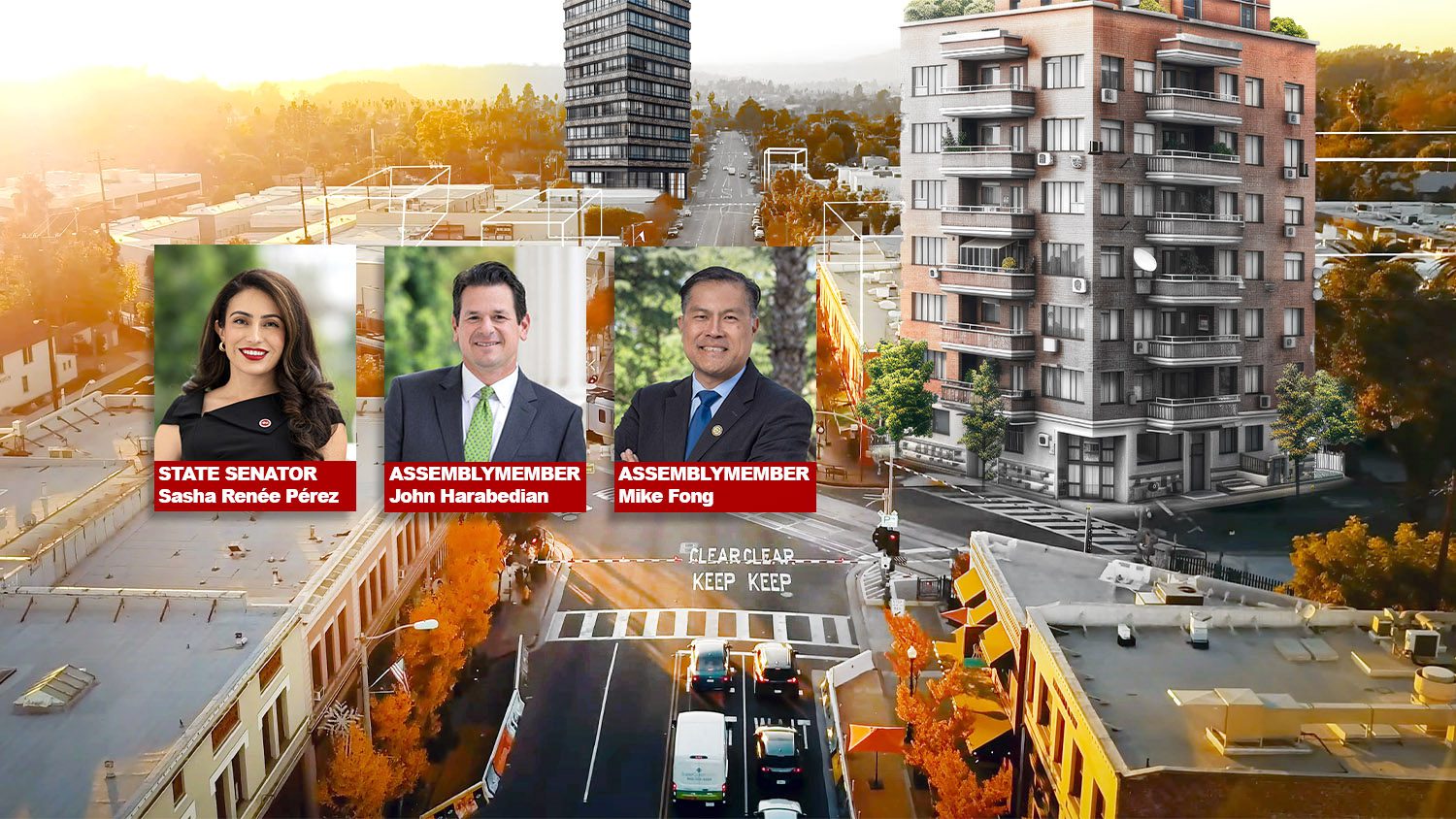
Senate District 25 — Sasha Renée Pérez (D–Pasadena): Represents Pasadena, South Pasadena, Altadena and much of the SGV/foothills; Sacramento Phone — (916) 651-4025 –Pasadena Phone — (626) 304-1086district site lists contact options.
- Assembly District 41 — John Harabedian (D–Pasadena): District covers South Pasadena, Pasadena, and foothill communities. Sacramento Phone: (916) 319-2041 – Pasadena Phone: (626) 351-1917 Official page lists Capitol and District Office contacts.
- Assembly District 49 — Mike Fong (D–Alhambra): District covers South Pasadena, Pasadena, and foothill communities.(626) 457-4918 Official page lists Capitol and District Office contacts.
Editor’s note: Constituents contacting offices about SB 79 may wish to reference: (1) historic-resource coverage (state/national registers); (2) hazard-zone consistency; (3) tenant-protection backstop if AB 1482 sunsets in 2030; (4) enforceable affordability and anti-displacement provisions in TOD areas; and (5) local-control clarity for cities that have already enacted major changes (e.g., Measure SP).
Now What?
Residents here have already absorbed sweeping state-driven housing changes.
SB 79 could push another large shift—near stations and major bus corridors in Pasadena and South Pasadena—without guaranteeing affordability outcomes unless the bill’s remaining holes are closed. With the Assembly vote window now open, there is still time to tell your Assemblymember and State Senator how you want them to vote.