
















Letter to the Editor: By Mike Brennan, South Pasadena Parent and Teacher.
South Pasadena is fortunate to have some of the highest-performing schools in California. Families move here because they believe in public schools, and they want their children to have a world class education without the price tag of private schools; My wife and I are extremely grateful for the education our daughter gets at South Pasadena Middle School, and that of our son at Arroyo Vista Elementary. They both benefit from an entire community that invests deeply in their schools with their resources of money and time. Just last week, several of my parent text chains celebrated that South Pasadena High School was ranked the 14th in Los Angeles County, 44th in California, and 309th nationwide. This is a tremendous achievement for our school administrators and the entire community.
But I had to wonder, what do the L.A. County high schools in the top 10 ranking have that we do not?
I did some digging and found that nine of the schools ranked higher than South Pasadena have policies in place that require students to keep their phones away for the duration of the school day with what is called a “Bell to Bell” policy. The other four are actively debating their policy, as is the case in South Pasadena.
The state of California has already recognized that smartphones present challenges for schools. In 2024, lawmakers passed the Phone-Free School Act (AB 3216), requiring every school district in the state to adopt a policy limiting or prohibiting smartphone use by July 1, 2026 in order to support student learning, well-being, and social development.

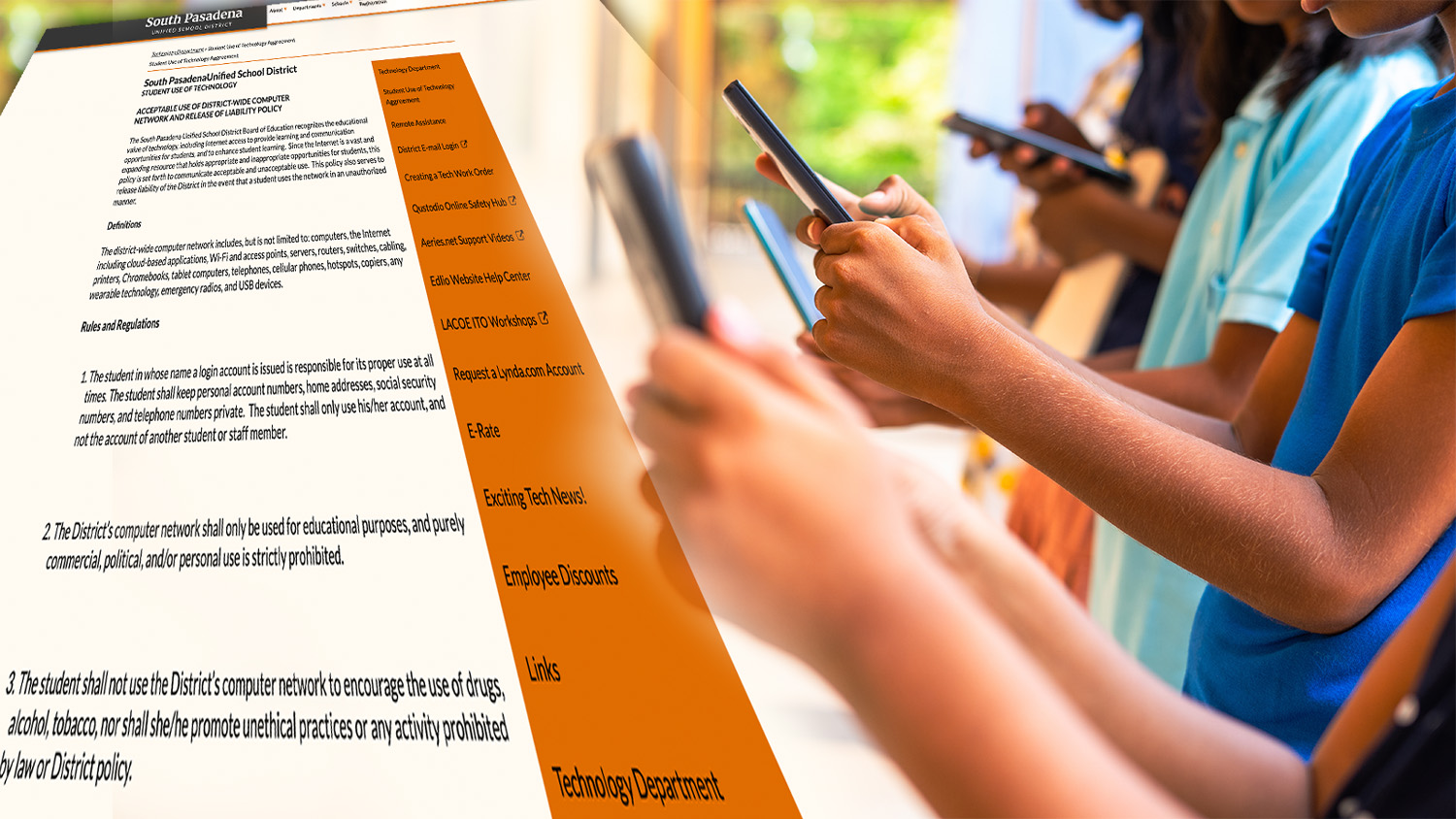
South Pasadena currently has an “Away During Instruction” policy at the high school with stronger restrictions at the elementary and middle school levels. This fulfills the state’s requirement. But the law established a floor, not a ceiling. It required districts to have a policy; it did not tell communities what the best policy should be. That decision remains ours and I strongly believe we need a “Bell to Bell” policy at South Pasadena High School.
I teach middle school social studies at a charter within LAUSD, which as of this fall prohibits cell phone use during the school day at all levels. I see every day what happens when students are fully present. They talk to one another. They collaborate. They argue about ideas. They laugh. They create. They take academic risks. They build relationships. Before stronger phone restrictions were implemented, I watched students leave class and immediately pull out their phones. Heads down. Eyes on screens. Walking across campus physically together but mentally somewhere else.
The difference is tragically impossible to miss.
I have attended several school board meetings to try to understand SPUSD’s more lax approach to smartphones, and an argument I hear in defense of allowing our high school students to have their phone throughout the day is that enforcing a “Bell to Bell” policy is too large a burden to implement for teachers and staff. That argument simply doesn’t match my experience. As with all policies, once students see that a rule will be enforced, very few attempt to bend it. My peers and I enforce the rule happily because we believe in the benefits they receive from it.
School is one of the few places where we can deliberately create room for human connection with people their own age. A conversation across a lunch table. A student asking a classmate a question instead of sending a text. Two friends laughing together in a hallway. A group of students working through a disagreement. A teacher notices a student who needs encouragement. These moments are the fabric of a school community.
If those of us working in education are not in the business of making the best decisions for students’ academic success and mental health, what are we doing?
This is not an argument against technology. Technology is an important tool, and our students need to know how to use it well. But a smartphone is designed to compete for attention and there is documented evidence of the havoc it is wreaking on this age group, and we are seeing varied reactions to it. The state of Kansas just passed legislation requiring a statewide bell to bell policy. LAUSD has a district-wide bell to bell policy for the close to 408,000 students in the district (South Pasadena Unified serves around 4,700 students). And Meta just settled a landmark case for up to 17 billion dollars, an acknowledgment that they engineered its platforms to be addictive to children and teens, knew this was damaging their mental health, and misled the public about it.
This year, we can change our policy to align with the other top L.A. County high schools. South Pasadena will elect three members to our Board of Education. These seats are uncontested, and two incumbents are stepping forward again to serve. A school board is not simply an administrative body that approves budgets and policies. It is entrusted with the daily lives and futures of young people. I believe strongly that these leadership positions – even and especially those that are uncontested – carry a moral responsibility. That means listening carefully, being willing to reconsider previous positions based upon research, and having the courage to make decisions. I understand that reasonable people have legitimate concerns, but our school board has been considering this policy for too long, and listening to concerns cannot become an excuse for avoiding action.
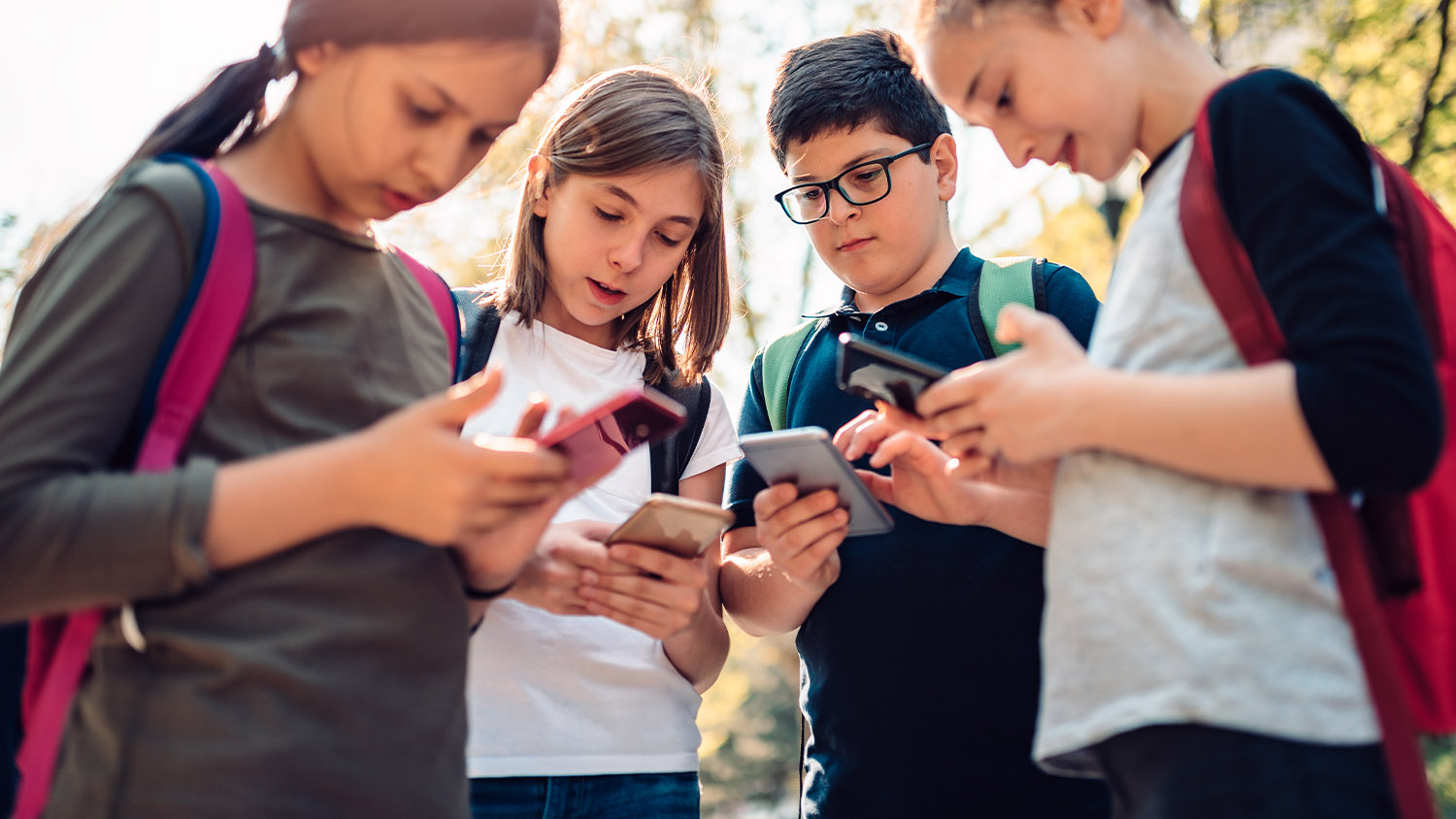
The year is 2026. We have a robust body of research and data that all points in the same exact direction: the more technology children use, the more anxiety they will experience, the less connected they feel, and their academics and mental health will suffer as a result.
Our children get one middle school experience, and one high school experience. When our students look back on these years, we want them to remember not what they saw on a screen, but the people they met, the friendships they made, the ideas they discovered, and the community they were part of.
I want my children—and every child in South Pasadena—to have as much of that real, messy, funny, complicated human experience as possible.