





What Happened Saturday
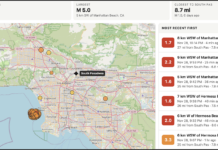
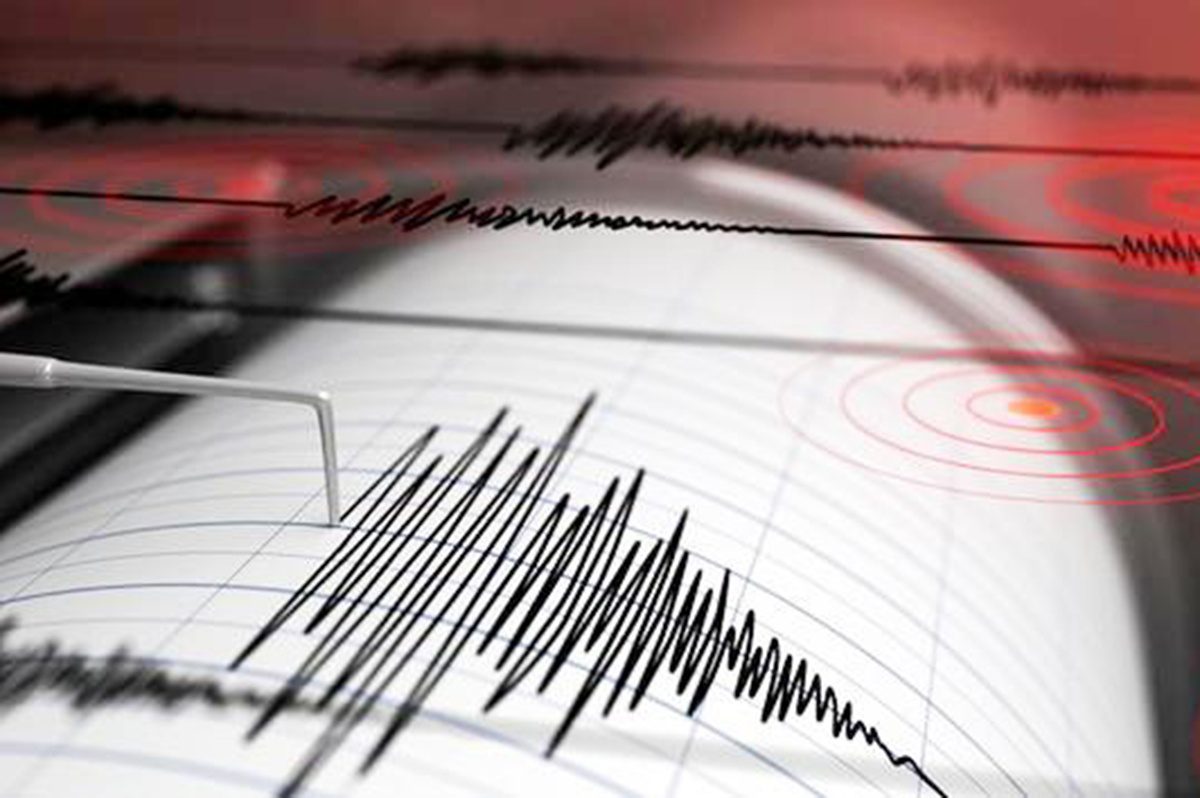
• Magnitude 5.0 at 9:30 a.m., about 4 miles southwest of Manhattan Beach, roughly 7.5 miles deep. That is about 25 miles from South Pasadena.
• The biggest aftershock so far was a magnitude 4.6 at 11:41 a.m. in the same area, strong enough to set off ShakeAlert warnings on phones. Some early reports list it as a 4.5.
• More than 90 aftershocks were recorded by Saturday night, including two around magnitude 4 and eight between magnitude 3 and 4.
• Shaking was felt from Ventura County to Pasadena.
Damage and Response
• No injuries have been reported.
• The Los Angeles Fire Department went into “earthquake mode,” sending crews from all 106 neighborhood fire stations to check their districts. They reported no damage or injuries in the City of Los Angeles.
• Windows shattered at LAX, and part of a Terminal 7 walkway was blocked off. One incoming jet was told to abort its landing. Operations returned to normal quickly.
• The Chevron refinery in El Segundo and the Torrance refinery both flared. That is an automatic safety system kicking in, and Chevron said it posed no risk to the community.
• There is no tsunami danger. The National Tsunami Warning Center confirmed it.
Is This a Swarm or Aftershocks?
Experts say aftershocks. A swarm is a cluster of quakes with no single standout event. This sequence has a clear main shock, the 5.0, with smaller quakes trailing behind it in the same spot.
Caltech seismologist Lucy Jones said the sequence is busier than average but still within the normal range for aftershocks. A magnitude 3 hit the same general area a couple of days earlier, and a tiny 1.6 struck a few hours before the 5.0. Looking back, those count as foreshocks. Scientists only use that label after a bigger quake follows.
Could a Bigger One Follow?
• The odds are about 5 percent, or 1 in 20, according to Jones and U.S. Geological Survey seismologist Clara Yoon.
• That risk is highest in the first few days and drops every day after.
• Put the other way, there is about a 95 percent chance nothing bigger comes out of this.
• Nobody can tell ahead of time whether a quake is a foreshock. “We have never found a discriminant for foreshocks,” Jones said.
• Expect aftershocks to keep coming for weeks, getting smaller and less frequent.
What About The 1990’s Northridge Quake Pattern?
The claim going around social media is that the 1994 Northridge earthquake started with clusters just like this. It is partly true, and it is misleading.
Before the magnitude 6.7 Northridge quake, two small clusters of earthquakes did show up: one about 15 miles to the south seven days earlier, and one about 22 miles to the north-northwest 16 hours earlier, according to research by Caltech and USGS scientists. Nobody could tie them to Northridge until after the big one hit.
Saturday’s quakes are offshore, on a different fault. Jones said the 5.0 was a thrust fault. The Palos Verdes and Redondo Beach faults are possible culprits, but scientists say it is too early and too small an event to say which.
Bottom line: small quakes sometimes come before a big one. Far more often, they come before nothing at all.
LA County Advises:
• If you feel shaking: drop, cover and hold on until it stops.
• Turn on earthquake early warning alerts on your phone, or download the MyShake app.
• Check your water and emergency supplies, and secure heavy items on shelves.
• Ignore viral “prediction” posts. Nobody can predict earthquakes.
• Felt one? Report it to the USGS “Did You Feel It?” page. It helps the scientists.
Track every quake as it happens on The South Pasadenan’s live earthquake map at southpasadenan.com/earthquakes, updated every two minutes with USGS data.