
















California’s race for insurance commissioner has taken on heightened significance for survivors of the January 2025 Eaton and Palisades fires, many of whom continue to face disputes over insurance payments, smoke damage claims and the costs of rebuilding.
With the November 3 general election approaching, wildfire survivor organizations are calling for stronger oversight of insurance companies and greater accountability from the state agency responsible for enforcing insurance laws.
The election pits Democratic State Senator Ben Allen of Santa Monica against Jane Kim, a former San Francisco supervisor and consumer advocate. Both candidates advanced from California’s June primary and are seeking to succeed Insurance Commissioner Ricardo Lara, who is completing his second and final term.
The California insurance commissioner oversees the California Department of Insurance (CDI), which regulates insurers, investigates complaints, enforces insurance laws and reviews insurance rates.
For homeowners in fire-affected communities such as Altadena and Pacific Palisades, the position has become particularly important as insurance disputes continue to complicate recovery.
Fire Survivors Demand Stronger Insurance Oversight
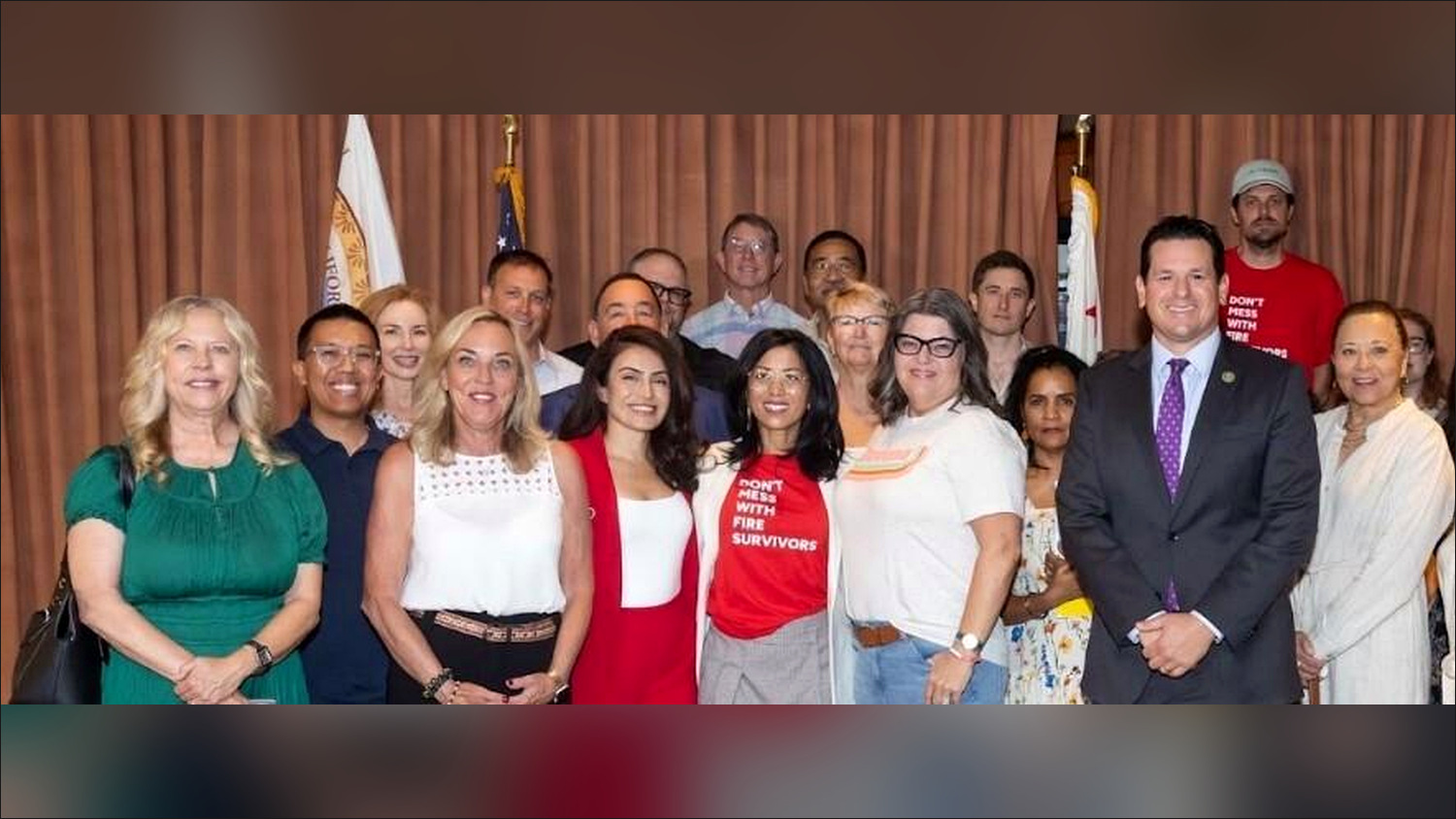
The Every Fire Survivor’s Network, an organization advocating for families affected by the January 2025 wildfires, has criticized the handling of insurance complaints and urged state officials to take stronger action against insurers accused of delaying or denying legitimate claims.
The organization has cited research from the nonprofit Department of Angels indicating that approximately 70% of surveyed insured survivors of the Eaton and Palisades fires reported claim delays, denials or underpayments that interfered with their recovery.
The findings, reported by Spectrum News in July 2025, highlighted the difficulties many families encountered while attempting to obtain insurance benefits after losing their homes or suffering significant property damage.
In August 2025, survivor advocates and state lawmakers representing fire-affected communities called on Commissioner Lara to take additional steps to address insurance claims.
Their requests included stronger enforcement against improper claims practices, protections for displaced families and greater accountability for insurers handling smoke damage and rebuilding claims.
The demands were part of a broader campaign to improve California’s insurance regulatory system.
More recently, on October 22, a coalition of six wildfire survivor organizations and former Los Angeles Unified School District Superintendent Austin Beutner sent a letter to Allen and Kim seeking commitments on insurance coverage for comprehensive smoke contamination testing and cleanup.
The coalition requested that insurers be held accountable for evaluating potentially hazardous contamination inside homes that survived the fires, including in attics, walls, ductwork and ventilation systems.
The groups requested responses from both candidates by October 26, according to City News Service reporting published by Pasadena Now.
State Farm Investigation Raises Questions About Claims Enforcement
The controversy surrounding insurance oversight intensified following a February 2026 Los Angeles Times investigation examining complaints from wildfire survivors and the department’s response to alleged misconduct by State Farm.

The investigation included the case of Coleen Vandepas, a longtime California Department of Insurance complaint officer who criticized State Farm’s handling of wildfire insurance claims.
According to personnel records reviewed by the newspaper, Vandepas described the insurer’s claims handling as “shoddy” and “shameful” in correspondence with a company representative.
A State Farm attorney subsequently contacted a senior department official to complain about her statements.
Vandepas was later removed from her State Farm caseload and received a 10% pay reduction.
Department supervisors cited improper and accusatory remarks as grounds for discipline. A state personnel board rejected her appeal, and a separate appeal was subsequently filed.
The incident raised concerns among wildfire survivor advocates about whether department employees could aggressively challenge insurers without facing professional consequences.
State Farm told the Los Angeles Times that it was not a party to the personnel matter. The reporting did not establish that the company directed the department’s disciplinary decision.
Meanwhile, the Department of Insurance has taken enforcement action against State Farm over its handling of wildfire claims.
On May 4, 2026, the department announced that an examination of 220 claims identified 398 alleged violations of California insurance laws across 114 claims.
The findings included delayed investigations, inadequate communication, underpayments and problems involving smoke damage claims.
The department initiated administrative proceedings seeking financial penalties and corrective action.
State Farm disputed the allegations, rejecting claims that it had systematically mishandled or intentionally underpaid wildfire claims. The company said it would respond through the regulatory process.
The department also reported recovering more than $280 million for Eaton and Palisades fire survivors through intervention with insurers as of May 2026.
Separately, Los Angeles County announced an investigation into the California FAIR Plan on October 7, 2026, following complaints involving delayed payments, denied claims and disputes over toxic contamination testing and remediation.
These proceedings underscore the continuing conflict between insurers, regulators and policyholders over the handling of wildfire losses.
Ben Allen and Jane Kim Offer Different Approaches
Although both candidates have pledged to strengthen consumer protections and hold insurance companies accountable, their proposals for addressing California’s insurance crisis differ.
Ben Allen, a state senator whose district includes Pacific Palisades, has emphasized improving the existing insurance system through stronger enforcement, wildfire prevention and greater competition among insurers.
Allen supports increasing staffing at the Department of Insurance to help address consumer complaints and accelerating efforts to make homes and neighborhoods more resistant to wildfires.
He also authored Senate Bill 1209, legislation signed into law in September 2026 that strengthens the department’s authority to require insurers to carry out corrective actions identified during regulatory examinations. The law takes effect January 1, 2027.
Allen has argued that reducing wildfire risks and improving oversight can help restore insurance availability and control costs without fundamentally replacing California’s existing insurance market.
Jane Kim, a former San Francisco supervisor and civil rights attorney, has proposed more extensive changes to the insurance system.
Her central proposal is a publicly administered disaster insurance program intended to provide coverage for catastrophic risks, including wildfires and floods.
Kim has proposed funding the program through insurance premiums and directing some of those resources toward disaster prevention and community resilience.
She has also called for stronger transparency requirements, limits on excessive insurer profits and changes to the California FAIR Plan.
Her proposal has drawn support from advocates seeking structural reform, while critics have questioned the financial risks and feasibility of creating a large publicly administered insurance system.
Both candidates have expressed support for stronger consumer protections and greater accountability in the insurance industry.
A detailed comparison of their platforms is available through CalMatters’ 2026 insurance commissioner voter guide.
Insurance Industry Influence Remains an Issue
Questions about the insurance industry’s influence over California regulators have also become part of the election.
Both candidates have pledged not to accept direct campaign contributions from insurance companies.
However, an October 26 CalMatters investigation found that an independent political committee supporting Allen had received contributions connected to the insurance industry.
Allen told CalMatters that he had not requested or welcomed those contributions.
Independent political committees operate separately from candidate campaigns and may raise and spend money without coordinating with the candidates they support.
The findings have added another dimension to broader discussions about regulatory independence and how California’s next insurance commissioner will approach the companies the office is responsible for overseeing.
Why the Election Matters to South Pasadena and Nearby Communities
Although the Eaton Fire primarily devastated Altadena and surrounding areas, the insurance challenges facing survivors have implications throughout the San Gabriel Valley and California.
Homeowners across the state have experienced rising premiums, difficulty obtaining coverage and growing reliance on the FAIR Plan as some private insurers have restricted coverage in areas considered vulnerable to wildfires.
The next insurance commissioner will inherit an insurance market facing significant pressure to balance consumer affordability, insurer financial stability and access to coverage.
The office will also oversee the enforcement of existing consumer protection laws and the implementation of additional reforms intended to improve disaster recovery.
For survivors still waiting for adequate settlements, the central issue is whether the next commissioner can ensure that insurance companies meet their legal obligations and that policyholders receive fair treatment.
California voters can review both candidates’ statements and the responsibilities of the office through the California Secretary of State’s official voter information guide.
The November 3 election will determine who leads California’s insurance regulatory system during a critical period for wildfire recovery and the future of property insurance throughout the state.